Siding is part of a larger exterior protection system, and that system has to manage water correctly. Rain, melting snow, roof runoff, splashback, clogged gutters, poor grading, and old flashing details can all push moisture behind your siding, where it does not belong.
We have worked on Nebraska homes for long enough to know that large siding failures are almost always water protection failures first. A cracked panel or warped board is usually the symptom and poor drainage is the reason that damage spreads.
If you are already planning a siding project, this is the right moment to address home drainage and siding replacement at the same time. New siding should look clean, perform well, and help protect your home from moisture damage for years to come.
Your siding is the outer shell, but it was never meant to be fully waterproof on its own. Behind the panels sits a layered system of house wrap, flashing, sheathing, and framing. When gutters overflow, flashing leaks, or the ground slopes the wrong way, water sneaks into that layered system and stays there. Over time it rots sheathing, feeds mold, and damages insulation.
Nebraska weather makes this worse. Spring storms dump heavy rain in short bursts. Summer thunderstorms bring wind-driven water against walls. Winter creates freeze-thaw cycles that expand tiny cracks into big ones.
During a siding replacement project, we have access to parts of the exterior that are normally covered. That makes it the right time to inspect for hidden damage and improve the way your home handles water. Instead of covering up old problems with new siding, we can help correct the details that caused those problems in the first place, and prevent them from happening again.
Many homeowners do not realize their drainage is failing until we pull the old siding off. Some warning signs are easier to spot from the outside. If you notice any of the following, drainage repairs should be part of your siding project:
One family we worked with in Papillion had replaced sections of their basement carpet twice before calling us. They assumed the problem was their foundation. When we opened the wall during their siding job, we found rotted sheathing behind a bad kickout flashing near the garage roof. Every storm was pushing water straight into the wall cavity. Fixing the flashing during the siding replacement solved a basement problem they had been chasing for years.

When any part of your home's drainage system fails, water can get trapped behind the siding. Over time, that moisture can lead to soft sheathing, mold concerns, peeling paint, damaged insulation, wood rot, insect activity, and interior wall problems.
These are the most common culprits that lead to water damage that you should inspect when planning for new siding installation:
Gutters are the first line of defense, and undersized or clogged gutters cause a large share of the siding damage we see. Standard five inch gutters can struggle during heavy downpours. On many homes we recommend installing six-inch seamless aluminum gutters with three by four inch downspouts, which move significantly more water. For homes surrounded by trees, gutter guards are a fantastic way to reduce clogs and overflow.
Tevelde and Co. offers gutter repairs, gutter installation, and gutter replacement services to help protect your exterior and provide proper drainage.
Flashing is thin metal that directs water away from vulnerable spots. When siding is off, we can inspect and replace the flashing protecting vulnerable spots:
House wrap is the layer that sits between your sheathing and your siding. It is designed to block bulk water while allowing vapor to escape in the right conditions. When installed correctly, it protects potential problem areas and helps direct water downward and out of the wall system. If your current home has torn, stapled-over, or missing house wrap, now is the time to replace it.
Some siding damage comes from the roof above. If gutters are undersized, clogged, loose, or draining poorly, water may spill down the siding during storms. Over time, that runoff can stain the exterior, saturate trim, and contribute to moisture problems behind the siding.
Roof-to-wall intersections are also important. Where a roofline meets a wall, proper flashing and kick-out flashing help direct water into the gutter instead of behind the siding. Missing or poorly installed kick-out flashing can cause serious water damage in a concentrated area.
Even when the siding installation is done correctly, poor ground-level drainage can continue to push moisture toward the foundation, basement walls, crawl space, and lower sections of the exterior. The ground around your home should slope away from the foundation, dropping roughly six inches over the first ten feet. This change in grade is important to redirect water away from your house. Many older Nebraska yards have settled over time and now slope toward the house. You may want to add dirt, regrade soil to slope it away from your home, and landscape around your home's foundation.
French drains can help when surface grading alone does not move water away effectively. French drains are typically a gravel-filled trench with a perforated pipe that collects excess water and redirects it to a safer discharge point. A properly planned French drain can reduce soil saturation around the home and help protect the foundation from long-term moisture pressure.
French drains need the right location, depth, slope, pipe type, gravel, filter fabric, and outlet point. Poorly planned drainage can move water to the wrong area, affect a neighbor’s property, or create new erosion problems. If your siding damage is concentrated along one wall or near a low side yard, we may recommend having the drainage layout evaluated before or during the siding project so the home’s exterior improvements work together.
Landscaping also plays a major role in foundation protection. Planting beds should be shaped so water flows away from the house. Mulch should be kept below the siding and trim, not packed against the wall. Shrubs and plants need enough spacing to allow airflow along the exterior, since dense landscaping can hold moisture against siding and make it harder for the wall to dry after storms.
Splash blocks are acceptable in some situations, but buried drain lines that carry water ten feet or more from the foundation are far more effective. For properties with clay-heavy soil (common across eastern and central Nebraska), a dry well or connection to a storm system may be the best solution.

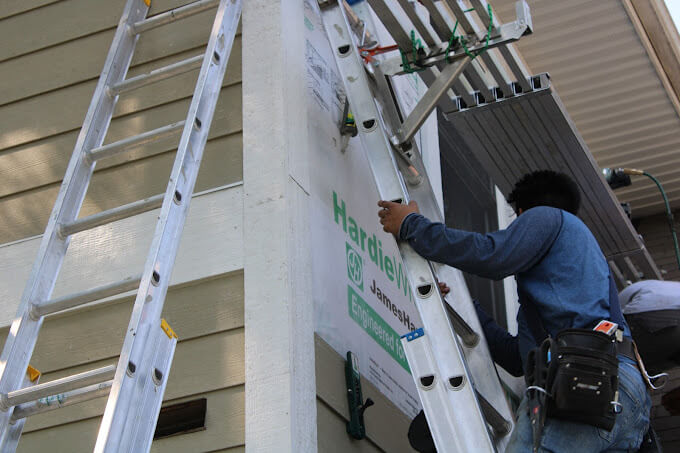
With the siding removed for a siding replacement project, we can see what is really happening inside your walls. We check sheathing for soft spots, look for past water trails, and confirm that flashing was installed correctly the first time. Most of our customers are surprised by what sits behind their old panels.
Combining projects also saves money. A standalone flashing repair or house wrap replacement requires removing siding, which is a significant chunk of the labor. If we are already removing it, the added cost for drainage improvements is a fraction of what it would be later. You also end up with a single coordinated warranty covering both the siding and the water management system behind it.
Our siding replacement process starts with a full exterior inspection, including gutters, downspouts, flashing points, grading, and any history of interior water issues. From there we build a written plan that lists what should be repaired, upgraded, or left alone. Once the old siding comes off, we do a second inspection of the sheathing and framing, then share any new findings with you before moving forward.
If we remove old siding and find water-damaged sheathing, rotted trim, or compromised framing components, those issues should be addressed before the new siding is installed. Covering damage does not fix it. Moisture problems can continue behind the new exterior, eventually leading to higher repair costs and shorter siding life.
Installation happens in a coordinated sequence: sheathing repairs, flashing, house wrap, drainage adjustments, then new siding. Different siding materials handle moisture in different ways, but every siding system needs proper water management. Vinyl siding, fiber cement siding, engineered wood siding, and composite siding all depend on correct installation.
At the end we walk the property with you, explain how the system works, discuss your warranty coverage, and provide maintenance guidance so the investment lasts.
Tevelde and Co. provides siding replacement services for homeowners who want the job done carefully from the outside layer to the hidden details behind it. We understand that siding is a major investment, and we treat it as part of a complete exterior system.
Homeowners choose us because we look for the source of moisture problems, explain what we find, and recommend practical solutions. We do not believe new siding should simply cover old damage. A stronger project starts with proper preparation, correct installation, and honest communication.
Addressing drainage during a siding replacement protects more than your walls. You end up with a drier basement, longer-lasting siding, reduced mold risk, and lower energy costs because your insulation stays dry. Homes with documented drainage improvements also tend to appraise better and sell faster, something real estate agents in the Omaha metro mention often.
We serve homeowners throughout Nebraska, including Omaha, Lincoln, Bellevue, Papillion, Gretna, La Vista, and surrounding communities.
It depends on the scope. Simple gutter upgrades and flashing improvements may add a few thousand dollars. Full regrading with buried drain lines costs more. We provide itemized estimates so you can choose what fits your budget.
Absolutely. We color-match gutters and downspouts to complement your siding, trim, or roof.
Yes. For projects that require permits (grading changes, certain drainage installations), we manage the paperwork with your local municipality.
Most homes take one to three weeks depending on size, weather, and the scope of drainage work. We give a clear siding replacement timeline before starting.
If you are considering siding replacement, this is the right time to get your home’s drainage right. Call us to schedule a free on-site inspection, and we will walk your property with you, point out any concerns, and put together a straightforward plan that protects your home for decades.
(402) 699-2670