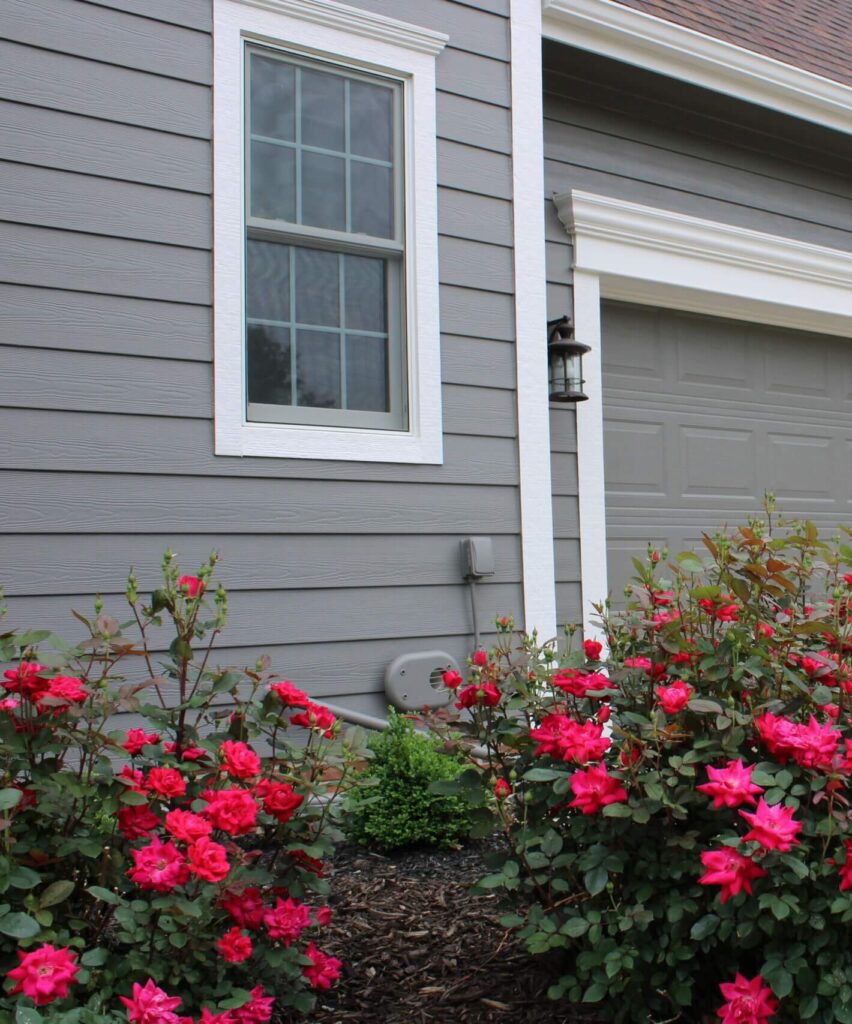
At Tevelde and Co., we help Omaha homeowners compare siding replacement options based on budget, appearance, maintenance, durability, and how each material performs in Nebraska weather. The right siding replacement option should fit your home’s style, your maintenance preferences, and your expectations for long-term performance. Whether you are considering fiber cement siding, vinyl siding, engineered wood siding, composite siding, or another exterior material, our team can help you understand the pros, limitations, and installation requirements before you commit to a project.
Replacing siding is one of the most visible exterior remodeling projects you can make. It can give an older home a cleaner look, improve weather resistance, and reduce the ongoing cycle of repairs, repainting, and patchwork fixes. It can also help address hidden issues behind the siding, including damaged sheathing, worn house wrap, poor flashing, or moisture problems around windows and doors.
The best siding choice depends on the house and your personal preferences. Some homeowners want a premium material with a long service life and strong curb appeal. Others want a cost-effective option that is easy to maintain. Some want to preserve a classic Omaha neighborhood look, while others want a more modern design with board and batten accents, contrasting trim, or mixed exterior materials.
At Tevelde and Co., our siding experts will meet with you to discuss your goals and then find the best siding materials to fit your home. Contact us today to get started with a free siding replacement estimate.
Good siding does three important jobs. It protects the structure underneath, it keeps your energy bills reasonable, and it makes your home look great from the curb. When any of those start to slip, replacement becomes a smart move rather than a maintenance headache.
Plus, Nebraska weather is tough on homes. We see temperatures swing from 100+ degrees in July to well below freezing in January, and that constant expansion and contraction wears down siding faster than most homeowners realize. Add in hail season, high winds, and summer humidity, and you have a recipe for warped panels, faded color, and hidden moisture damage.

There are many different siding types for Nebraska homeowners to choose from. Below are the siding replacement options that we install most often:
When homeowners ask us what we would put on our own houses, fiber cement is the answer. James Hardie products perform beautifully in Nebraska conditions and are our top choice.
Fiber cement is made from a blend of cement, sand, and cellulose fibers, which makes it fire-resistant, pest-resistant, and remarkably stable through temperature swings. It handles hail better than vinyl, holds its color for 15 years or more, and carries a 30-year warranty from James Hardie.
The downsides? Fiber cement siding replacement costs more upfront, usually $8 to $14 per square foot installed, and installation is more labor-intensive because the boards are heavy. For homeowners planning to stay in their house long-term, the math almost always works out.
Vinyl remains the most popular choice across Nebraska, and for good reason. It is affordable, comes in dozens of colors and profiles, and requires almost no upkeep beyond an occasional rinse with the garden hose.
Modern vinyl has come a long way, improving its durability and long-term value. Brands like CertainTeed and Mastic produce thicker, more impact-resistant panels that hold up well in our climate.
Typical vinyl siding replacement cost ranges from $4 to $8 per square foot installed. Vinyl works best for budget-conscious homeowners, rental properties, or anyone who wants a fast, clean refresh without a huge investment.
LP SmartSide has become a more commonly requested siding option, especially for homeowners who love the look of real wood siding. It is made from engineered wood strands treated with zinc borate, which protects against rot, termites, and fungal decay.
What sets it apart in Nebraska is impact resistance. In hail-prone areas (which is most of the state), LP SmartSide holds up better than vinyl or fiber cement against golf ball-sized hail. It also comes pre-primed and accepts paint beautifully, so you can match any color scheme.
Expect to pay $6 to $11 per square foot installed. It does need repainting every 10 to 15 years, but the trade-off is a warmer, more natural appearance than any synthetic material can match.
Metal siding (steel and aluminum siding) has grown fast in popularity across the Midwest, and we install more of it every year. If you live in an area where hail season can be particularly brutal, steel might be the smartest long-term investment you can make.
Steel panels will not crack, fade, warp, burn, or attract pests. Many come with lifetime warranties, and the newer textured finishes look almost identical to wood or cedar shake. Companies like EDCO and ABC Seamless produce steel siding specifically engineered for Midwestern weather.
The catch is cost. Steel typically runs $10 to $16 per square foot installed. Heavy impacts can also leave dents, though most panels are designed to resist normal hail without damage.
Standard vinyl with a foam backing built right in, insulated vinyl offers a middle ground between basic vinyl and premium materials. The insulation adds R-value to your walls, reduces outside noise, and gives the panels extra stiffness so they resist impacts and lay flatter against the house.
We recommend this option for older Nebraska homes (anything built before 1990) where the original wall insulation is thin or settled. The siding replacement energy savings can be meaningful, especially during those weeks when temperatures drop below zero and your furnace runs constantly.
Pricing typically lands between $7 and $11 per square foot installed. It costs more than regular vinyl but less than fiber cement or steel, making it a solid middle-of-the-road choice.
Most homeowners do not cover their entire house in stone siding or brick, but adding veneer as an accent (around the entryway, on a front gable, or along the lower third of the facade) can completely change a home's curb appeal.
Manufactured stone veneer has gotten remarkably good over the last decade. Products look nearly identical to natural material at a fraction of the weight and cost. When we combine a fiber cement or LP SmartSide install with a stone accent wall, the results often look like custom new construction.

Choosing a siding material is only part of the decision. The profile, color, trim, and layout also affect how your home looks. A good siding replacement project should account for your home’s architecture, roofline, window style, stone or brick features, and surrounding neighborhood.
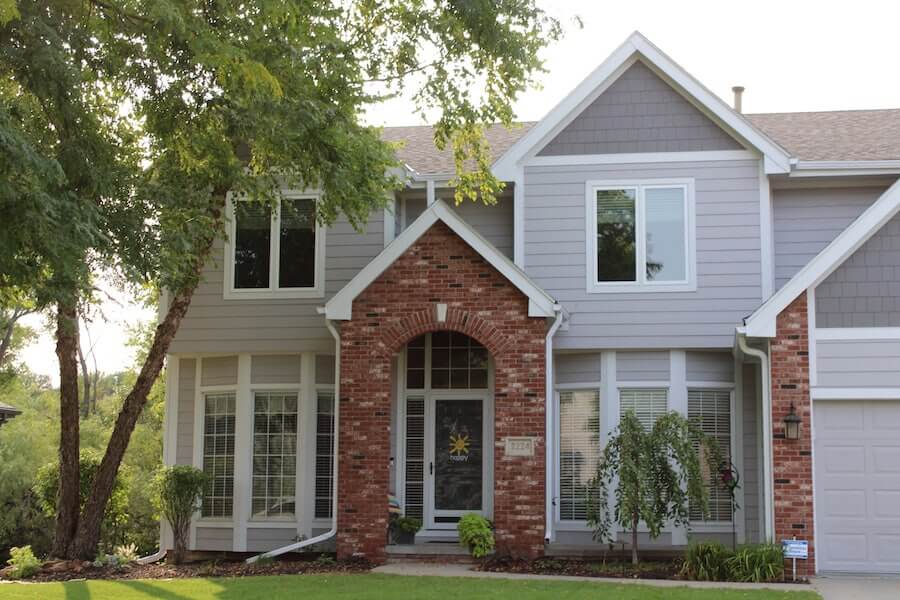
Horizontal lap siding is one of the most common siding styles for Omaha homes. It works well on ranch homes, split-level homes, two-story homes, and many traditional exterior designs. It gives the home a clean, familiar appearance and is available in several materials, including vinyl, fiber cement, engineered wood, composite, and wood.
Lap siding can look subtle and classic, or it can be paired with bold trim and accent colors for a more updated exterior.
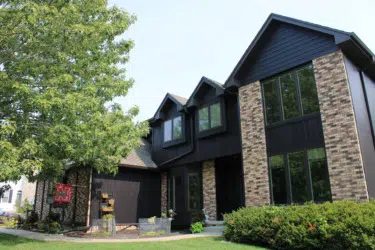
Board and batten siding uses vertical lines to create a taller, more defined appearance. It is often associated with farmhouse, craftsman, and modern exterior styles. Many homeowners use board and batten on gables, entry areas, dormers, or full elevations to create contrast.
It can be installed as a full-home siding style or used as an accent with horizontal siding.
Shake and shingle siding adds texture and visual depth. It is commonly used in gables, dormers, porch areas, and upper elevations. Shakes can create a more custom look, especially when paired with lap siding below.
This style is available in several materials, including vinyl, fiber cement, engineered wood, and composite products.
Many homeowners choose to combine siding with stone, brick veneer, trim, or accent panels. This can make the exterior feel more custom and balanced. For example, a home may use horizontal lap siding across most of the exterior, board and batten in the gables, and stone around the entry.
The key is to choose materials and colors that work together. Too many competing textures can make a home look busy. A balanced design can improve curb appeal while still feeling natural for the home’s style.
The right siding replacement should match your priorities. Cost matters, but it should not be the only factor. Maintenance, durability, style, weather resistance, and installation quality all affect the long-term value of the project. Here is how we help clients narrow down the options during our consultations.
Think about how long you plan to stay. If this is your forever home, investing in fiber cement, metal, or LP SmartSide usually pays off. If you might move in less than 7-10 years, quality vinyl gets the job done without overspending.
Be honest about maintenance. If the idea of repainting your house every 10 years sounds awful, rule out wood and lean toward vinyl, steel, or fiber cement.
Weather resistance matters in Nebraska. As a local siding contractor, we can help you compare siding options based on Nebraska weather instead of general product descriptions alone.
Energy-efficiency and comfort in your home. New siding alone may not solve every comfort issue, but a properly planned siding replacement project can help reduce drafts, improve moisture control, and support better indoor comfort.
How long your home is covered under warranty. Tevelde offers industry leading warranties on products from James Hardie and other manufacturers, as well as trusted workmanship guarantees.
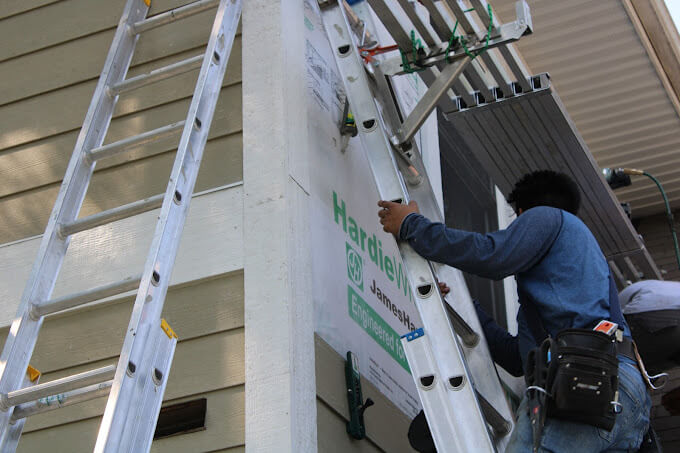
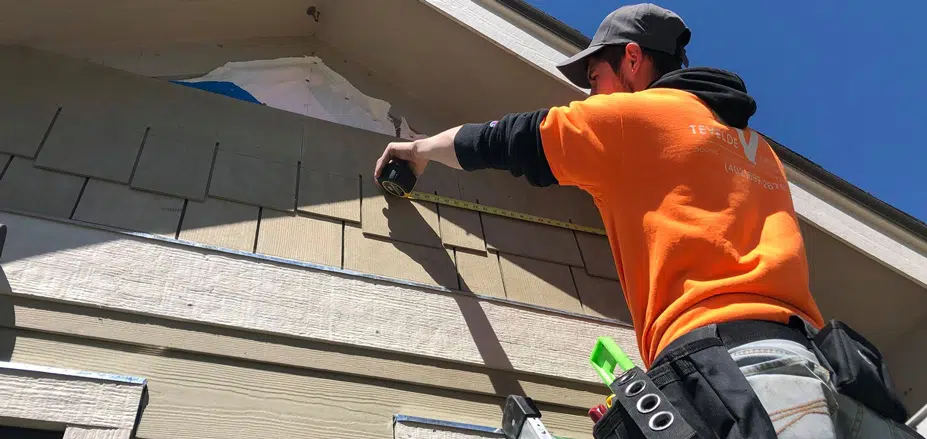
Every project we handle follows the same careful sequence of siding replacement steps. No surprises, no shortcuts.
Most projects follow a clear siding replacement installation timeline of 3-7 days, depending on the size of the home and weather conditions.
The price tag on a siding project depends on more than just the material you pick. Here is what affects your final number:
We include all of this in our written estimates, so you never get hit with a surprise expense at the end of the job.
Siding replacement is a significant investment, and we work hard to make it accessible. We offer financing terms that fit most budgets, including zero-interest promotional periods for qualified buyers.
If your siding was damaged by hail or wind, your homeowner's insurance may cover the replacement. We have handled restoration for hundreds of insurance claims across Nebraska and can walk you through the restoration process, and document everything for your claim. You pay your deductible, and insurance covers their part when applicable.
Every installation we perform is backed by the manufacturer's warranty plus our own workmanship guarantee. James Hardie products carry a 30-year limited warranty, LP SmartSide offers 50 years, and most steel products come with lifetime coverage.
We are a local Nebraska company, which means we understand what Nebraska weather does to a house. Our installers are licensed, insured, and certified by the manufacturers whose products we carry.
We have completed thousands of siding projects from Elkhorn to Omaha. Our reputation is built on showing up when we say we will, doing the work right, and standing behind it long after the trucks pull away.
Your home deserves siding that stands up to Nebraska weather and looks great doing it. Whether you are dealing with hail damage, rising energy bills, or a tired exterior that needs a refresh, we are ready to help. Request your free estimate today. We will visit your home, walk you through your options, and put together a detailed quote with no pressure and no obligation. Call us or fill out our online estimate form to get started.
(402) 699-2670