
House Wrap Importance in Siding
When people think about new siding, they usually focus on color, style, and curb appeal. Those details matter, but they are only part of the job. What sits behind it plays a major role in how well the entire exterior performs over time. That is where house wrap becomes important.
A good project is not just about covering a house. It is about protecting the structure from moisture, improving air control, and helping the wall assembly work the way it should. Without a house wrap, even well-installed, it can leave a home more exposed than most owners realize.
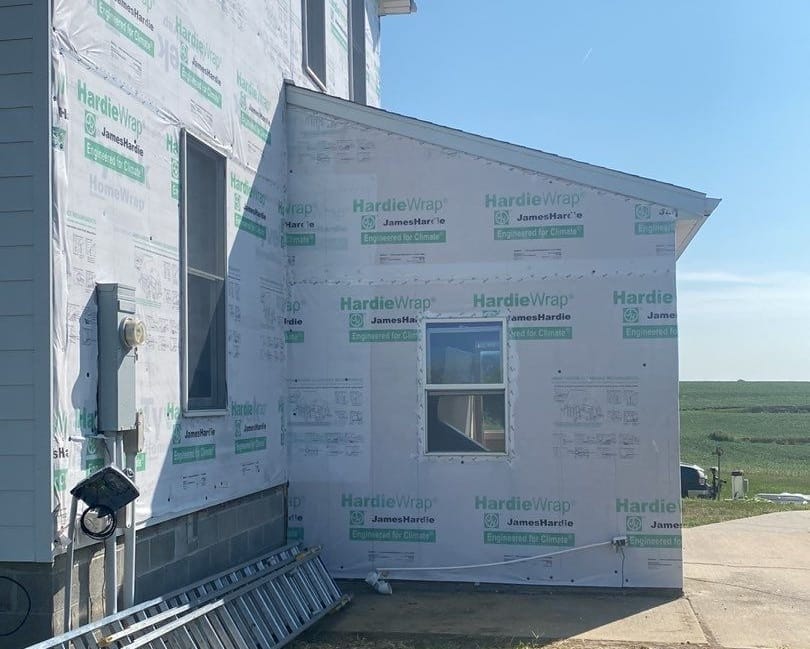
How House Wraps Work
A house wrap is a protective material installed behind siding and over the sheathing. Its job is to help manage water and air that move through the exterior of a home. While siding is the first line of defense, it is not meant to stop every bit of wind-driven rain or trapped moisture on its own.
That is why the home wrap acts as a backup barrier inside the wall. If water gets past the siding, the layer behind it helps keep that moisture from reaching the framing and interior materials. A strong house wrap protects the parts that are expensive and difficult to repair once damage starts.
In simple terms, house wrap gives the walls another layer of defense. It supports the building envelope by helping the assembly shed water while also reducing unwanted movement.
Moisture Protection Goes Beyond Home Siding
Many homeowners assume siding creates a sealed shell around the dwelling. It does not. Most siding materials are designed to handle exposure, but they are not fully waterproof. Small gaps, seams, and penetrations around windows, corners, and trim can all allow moisture to get behind the surface.
That does not mean siding is failing. It means it is one part of a larger system. Good siding construction takes that into account. The goal is to build layers that work together, not rely on one material to do everything.
This is where house wraps become a necessity, not an upgrade. It gives the exterior a weather-resistant layer that helps protect the shell and framing when water finds its way past the outer cladding. In real-world construction, that extra protection matters.
How A House Wrap Helps Manage Moisture
Water is one of the biggest threats to any home. Once moisture gets trapped inside walls, it can lead to wood rot, mold growth, insulation problems, and damage that stays hidden for a long time. A quality home wrap helps lower that risk by creating moisture protection behind the siding.
At the same time, house wrap allows water to escape in many assemblies. That matters because a wall needs to breathe to a certain degree. If moisture gets trapped with no way out, the problem can get worse even if the home exterior looks fine.
This balance is one reason installers pay close attention to the products they use. A properly selected house wrap can help block bulk water while still allowing vapor to move the way it needs to. That makes it an important control layer in the overall wall design.
Why Proper House Wrap Installation Matters
Even the best house wrap will not do much if installation mistakes are made. Seams need to be lapped correctly. Openings need to be detailed the right way. Fasteners, flashing, and transitions all need to work together. If those details are ignored, water can still reach the sheathing and framing.
That is why it is not enough to simply install a housewrap system and move on. The house wrap has to be integrated into the rest of the wall system. When done right, house wraps work with flashing, tape, and other resistive barriers to guide water out instead of trapping it inside.
This is especially important around windows and other penetrations where leaks often begin. A careful siding installer looks at the full path water may take, not just the surface appearance of the siding.
House Wrap and Air Barrier
Moisture is not the only issue. Uncontrolled air movement can also affect comfort and efficiency inside a home. When outside heat leaks through gaps in the exterior assembly, it can make indoor temperatures harder to regulate and increase strain on the HVAC systems.
A well-installed house wrap can help serve as an air barrier when the siding system is detailed correctly. That does not mean every house wrap performs the same way, and it does not replace the need for good installation.
When the exterior assembly controls ventilation better, the home often feels more stable inside. That is a benefit many people notice even though they never see the weather resistive layer behind the siding.
Different Wraps for Different Jobs
Not all house wrap products are the same. Some products are basic, and some are designed for better drainage or more demanding conditions. In certain projects, drainable housewraps can offer added performance by creating a small gap that helps water drain away more effectively.
That can be useful behind certain siding materials or in climates where repeated rain is a concern. In a drainable house approach, the goal is to move water down and out before it sits too long against the wall. House wrap is a critical part of the wall system, but it still works alongside the siding material chosen for the outside of the home. It is useful to consider materials like composite siding, wood, or fiber cement to understand how the full exterior system performs over time.
Some contractors may also refer to the full setup as a siding system because the house wrap works alongside tapes, flashings, and other components. That full setup is what helps protect the building rather than one material by itself.
Why this Matters for Long-term Performance
A siding project should do more than make a home look better. It should help the home exterior last longer and perform better. Without a house wrap, the risk of hidden moisture issues goes up. With it, the siding assembly has a better chance of staying dry and stable over time.
That is why homeowners should ask what is going behind the siding, not just what is visible from the street. Good siding installation includes attention to sheathing, flashing, vapor management, and moisture management. It is about protecting the home as a whole, not just improving the appearance of one surface. When properly installed, a house wrap lays the foundation for exterior protection for the life of the siding.
Need an Experienced Contractor?
If you are investing in new siding, make sure the protection behind it is handled by a contractor that understands the full exterior system. Tevelde and Co. is a family-owned Omaha-area company that has served homeowners since 2013, offering siding installation and repair. We work with leading materials like James Hardie, and back our work with a 10-year workmanship warranty and an A+ BBB rating. Contact Tevelde and Co. to schedule your consultation and get a siding project built for long-term performance, not just curb appeal.