
The material used to build a window frame significantly affects the cost of replacement windows. Vinyl is often one of the more affordable options, while fiberglass, composite, wood, and clad-wood windows generally cost more upfront.
Price is only one consideration. Frame material also affects maintenance, durability, energy efficiency, appearance, and how well a window handles Nebraska’s changing weather. If you’re budgeting for new windows, comparing costs by frame material helps you determine where it makes sense to spend more and where a more affordable option may meet your needs.
How Much Do Replacement Windows Cost by Frame Material?
Replacement window costs depend on window size, style, glass package, installation method, brand, and customization. For preliminary budgeting, homeowners may encounter price ranges similar to the following:
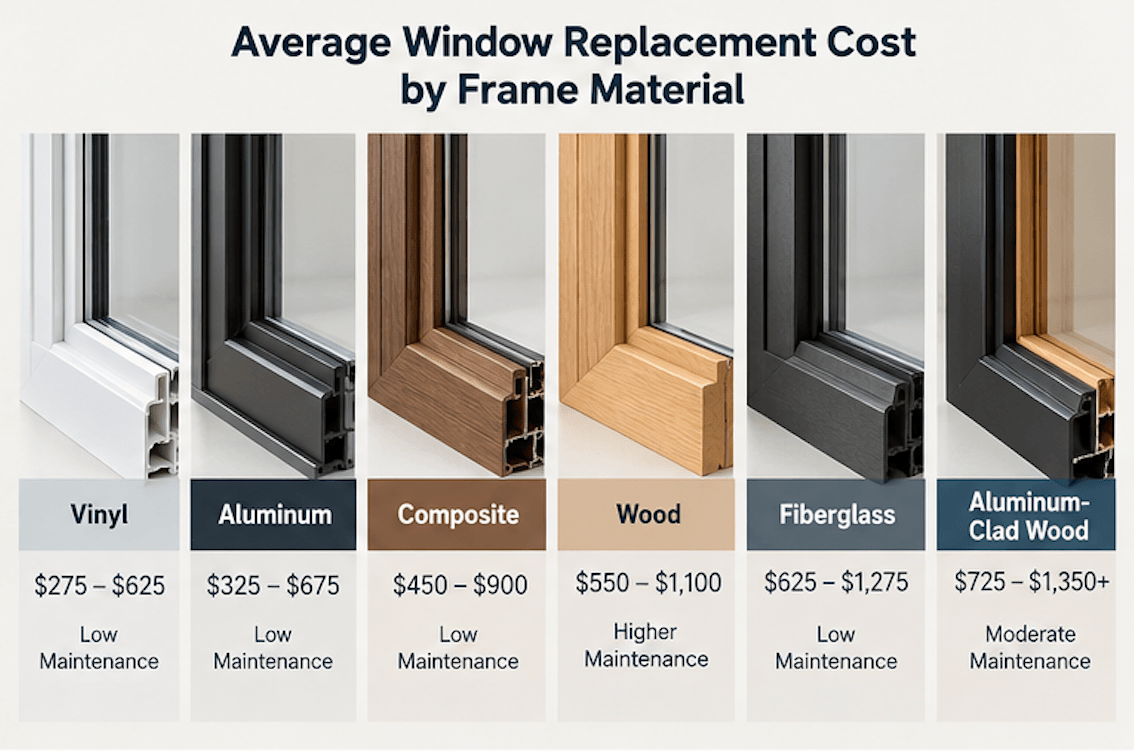
These are general budgeting ranges, not TeVelde & Co.’s window pricing. Larger windows, premium glass packages, custom colors, specialty shapes, and full-frame installation will increase costs. The best way to determine your actual window replacement cost is to have your existing windows inspected and receive an estimate based on your home.
Vinyl Window Replacement Cost
Vinyl is one of the most common frame materials for replacement windows. Its combination of affordability, insulation, and low maintenance makes it a practical option for many Nebraska homeowners.
Vinyl replacement windows may cost approximately $275 to $625 per window, although premium products and larger window styles cost considerably more. Quality varies widely between an inexpensive vinyl window and a premium vinyl window. Homeowners should look beyond the frame material and compare how each window is constructed.
Why Do Vinyl Windows Usually Cost Less?
Vinyl windows use PVC frames that are manufactured efficiently and do not require painting or staining. They also tend to require relatively little maintenance after installation. The frame won’t need periodic refinishing like traditional wood. A higher price does not automatically mean a better window. Two vinyl windows of the same size may have very different prices. Factors affecting cost include:
- • Frame thickness and construction
- • Internal reinforcement
- • Multi-chambered frames
- • Insulated or foam-filled frames
- • Double- or triple-pane glass
- • Low-E coatings
- • Custom exterior colors
- • Interior finishes
- • Hardware
- • Window style
Are Vinyl Windows Worth the Cost in Nebraska?
Quality vinyl windows provide a strong balance of cost, energy efficiency, and maintenance for Nebraska homes. The key word is quality.
Nebraska homes experience hot summers, freezing winters, wind, and substantial temperature changes. A well-built frame should remain stable as outdoor conditions change. For homeowners who want strong performance without paying premium window prices, vinyl is often a logical place to start.
Composite Window Replacement Cost
Composite windows are made from combinations of materials designed to create strong, stable frames. The exact construction varies by manufacturer. A general budget for composite replacement windows is approximately $450 to $900 per window, with premium products potentially exceeding that range. Composite windows commonly fall between vinyl and premium fiberglass or clad-wood products.
Why Do Composite Windows Cost More Than Vinyl?
Composite materials provide additional strength and dimensional stability. This is particularly useful for larger openings and climates with significant temperature changes. The additional material and manufacturing costs typically make composite windows more expensive than basic vinyl windows.
Are Composite Windows Worth the Higher Price?
That depends on the house and what you expect from the windows. A homeowner planning to stay in a house for many years may value durability and long-term performance more. Composite windows are a strong option when you need added frame rigidity. However, homeowners shouldn’t assume they need to upgrade simply because composite costs more. A quality vinyl window may provide everything a particular home needs.
Fiberglass Window Replacement Cost
Fiberglass is another premium window frame option. It is known for its strength, durability, and resistance to expansion and contraction. Fiberglass replacement windows may cost approximately $625 to $1,275 per window, depending on the manufacturer, size, glass package, and configuration. Custom and oversized fiberglass windows will cost more.
Why Are Fiberglass Windows More Expensive?
Fiberglass frames are strong without requiring extremely bulky profiles. The material is also dimensionally stable, meaning it expands and contracts relatively little as temperatures change. That combination makes fiberglass windows appealing in Nebraska, where windows face both summer heat and freezing winter temperatures.
Long-Term Cost of Fiberglass Windows
Higher upfront cost is only part of the calculation. Fiberglass requires little routine maintenance and provides a long service life when properly installed and maintained. Many fiberglass products can also be painted if a homeowner wants to change the appearance later. The higher initial investment may therefore be easier to justify for homeowners who plan to remain in their houses for a long time.
Wood Window Replacement Cost
Wood remains a popular material for homeowners who want the look of natural wood or need windows that fit a particular architectural style. Wood replacement windows may cost approximately $550 to $1,100 or more per window. Custom dimensions, premium wood species, specialty shapes, divided-light configurations, and upgraded finishes increase the price substantially.
Why Are Wood Windows More Expensive?
Wood windows typically involve more material, manufacturing, and finishing than basic vinyl windows. They also offer design options that aren’t always available with other materials. Homeowners can select different wood species, stains, paints, profiles, and architectural details.
Maintenance Costs of Wood Windows
Upfront price isn’t the only expense associated with wood. Depending on the product and exposure, wood may require periodic painting, staining, or sealing. You need to control moisture to prevent deterioration. Consider these maintenance requirements when comparing the lifetime cost of wood with lower-maintenance materials.
Wood makes sense when appearance and architectural authenticity are priorities. Historic homes are one example. A homeowner may want replacement windows that maintain the character of the original construction. Wood is also a viable option for premium homes where natural wood interiors are an important design feature.
Clad Wood Window Replacement Cost
Clad-wood windows combine a real wood interior with a protective exterior material. Aluminum is one of the most common exterior cladding materials. Aluminum-clad wood windows may cost approximately $725 to $1,350 or more per window. These products typically sit toward the higher end of the replacement window market.
What Are You Paying for With Clad-Wood Windows?
The goal is to combine two characteristics homeowners often want: the appearance of real wood indoors and better weather resistance outdoors. Exterior cladding protects the underlying wood from direct exposure to rain, snow, sunlight, and other conditions. This reduces exterior maintenance compared with traditional exposed wood windows.
Aluminum Window Replacement Cost
Aluminum windows use strong, relatively narrow frames. They are useful when homeowners want large glass areas or slim sightlines. Residential aluminum windows may cost approximately $325 to $675 per window, although high-end architectural aluminum systems are considerably more expensive.
Advantages of Aluminum Window Frames
Aluminum provides several practical advantages:
- • Strong frames
- • Narrow profiles
- • Low maintenance
- • Resistance to rot
- • Large glass openings
- • Modern appearance
Its strength allows manufacturers to create relatively thin frames while supporting substantial areas of glass.
Why Is Aluminum Less Common for Nebraska Homes?
Aluminum conducts heat more readily than vinyl, wood, fiberglass, and many composite materials. Modern aluminum windows use thermal breaks to reduce heat transfer, but homeowners in cold climates should pay close attention to the complete window’s energy-performance ratings. For Nebraska homes, aluminum is generally more application-specific than vinyl, composite, fiberglass, or clad wood.

What Else Affects the Cost of Replacement Windows?
As expressed throughout the breakdowns above, frame material is only one component of your estimate. Two homeowners choosing the same frame material can still receive very different prices.
Window Size
Larger windows require more frame material and glass. They may also be heavier and more difficult to install. Standard-size windows will generally cost less than oversized or custom-built units.
Window Style
Window style and operation also affect price. Common styles include:
- • Single-hung windows
- • Double-hung windows
- • Casement windows
- • Sliding windows
- • Picture windows
- • Awning windows
- • Bay windows
- • Bow windows
- • Specialty windows
A simple fixed picture window has fewer moving components than an operable window. Bay and bow windows involve multiple units and considerably more installation work. See our guide to Window Replacement Cost by Window Style for a closer look at these differences.
Glass Package
Don’t spend all your time comparing frames and overlook the glass. The window glass package represents a substantial portion of the window and plays a major role in thermal performance. Options may include:
- • Double-pane glass
- • Triple-pane glass
- • Low-E coatings
- • Argon or other insulating gas fills
- • Tempered glass
- • Laminated glass
- • Obscure or privacy glass
Upgrading the glass package increases window cost, but it also improves comfort and energy performance.
Insert vs. Full-Frame Window Replacement
The installation method will affect labor costs. An insert replacement allows a new window to be installed within an existing frame when conditions permit. This reduces the amount of demolition and finishing work required. Full-frame replacement removes the existing window down to the rough opening. This gives the installer access to the opening and allows deteriorated materials, flashing problems, and other issues to be addressed. Full-frame installation typically involves more labor and materials.
Installation Complexity
Some windows are simply harder to replace than others. Second-story installations, difficult access, masonry openings, large windows, unusual shapes, and structural repairs increase labor requirements. Existing siding and trim can also affect the scope of work.
Colors, Finishes, and Custom Options
Standard colors are usually the least expensive choice. Custom exterior colors, wood-grain interiors, upgraded hardware, grilles, specialty glass, and unusual shapes increase the price of each window. These upgrades may seem relatively small individually, but they add up quickly when replacing a full house with 10+ windows.
Upfront Window Cost vs. Long-Term Cost
The cheapest window on installation day isn’t automatically the least expensive window to own. Homeowners should consider several factors when comparing long-term value.
- • Expected Service Life: A window that costs more but provides a longer usable service life may offer better value over several decades. Quality matters here just as much as material. An inexpensive version of a particular frame material should not automatically be expected to perform like a premium product made from the same general material.
- • Maintenance and Refinishing Costs: Vinyl, fiberglass, composite, and aluminum generally require relatively little frame maintenance. Traditional wood may need periodic painting or staining. Consider those future maintenance requirements when comparing costs.
- • Energy Efficiency: Frame material affects thermal performance, but it isn’t the only factor. Glass packages, spacers, weatherstripping, installation quality, and air leakage have an equally important impact. Look at EnergyStar performance ratings for the complete window rather than judging energy efficiency from frame material alone.
Which Window Frame Material Offers the Best Value for Nebraska Homes?
No single frame material makes sense for every Nebraska home. For many homeowners, quality vinyl provides an appealing combination of price, efficiency, and low maintenance. It is especially practical when replacing many windows while keeping the overall project budget manageable.
- • Composite is worth considering when homeowners want greater rigidity and long-term durability without moving to traditional wood.
- • Fiberglass is another option for homeowners willing to pay more upfront for strength, dimensional stability, and low maintenance.
- • Wood and clad-wood windows generally appeal to homeowners who place a greater emphasis on appearance and architectural details. Clad wood provides the interior appearance of natural wood while reducing the amount of exterior maintenance required.
- • Aluminum works well in specialized applications, particularly when narrow profiles and large expanses of glass are priorities.

Get a Window Replacement Estimate From TeVelde & Co.
Average window prices are useful when you’re beginning to establish a budget. They can’t tell you exactly what your project will cost. Your final price depends on the number and size of your windows, frame material, window styles, glass package, installation method, finishes, and the condition of the existing openings. TeVelde & Co. installs replacement windows for homeowners throughout Omaha and surrounding eastern Nebraska communities. We will evaluate your existing windows, discuss material and product options, and help you compare choices based on your home’s needs and your budget.
Contact TeVelde & Co. to schedule an in-home consultation and get an estimate for your window replacement project.