
A cracked pane, foggy glass, or a draft around the frame does not always mean the entire window needs to be replaced. In some cases, replacing the glass is enough. In others, the problem affects the frame, sash, hardware, seals, or surrounding opening and calls for a full window replacement.
The right choice depends on the condition of the entire window system. Tevelde and Co. helps Nebraska homeowners evaluate the glass, frame, operation, energy performance, and installation before recommending the appropriate option.
What Is Window Glass Replacement?
Window glass replacement involves removing the damaged pane or insulated glass unit while keeping most of the existing window in place. This option is commonly used for cracked glass, impact damage, fogging between panes, or a failed insulated glass seal. The frame, trim, and surrounding opening usually remain in place. Depending on the window design, the sash may also be reused.
Glass replacement can be a practical choice when the damage is limited to the glass and the rest of the window is still structurally sound and operating correctly.
What Parts of the Window Stay in Place?
When only the glass is replaced, the main frame usually remains attached to the home. The interior trim, exterior trim, flashing, and surrounding siding are also typically left undisturbed. Keeping these components in place can make the project less extensive than full replacement. However, it also means that any existing problems with the frame, weatherstripping, hardware, insulation, or flashing will remain unless they are repaired separately.
Common Reasons to Replace Only the Glass
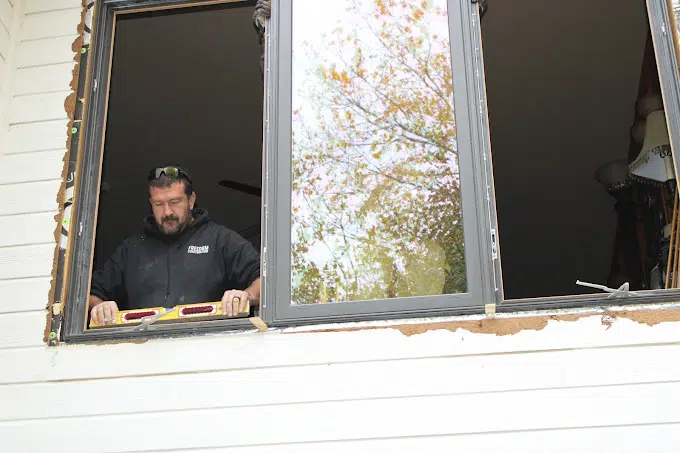
A cracked or shattered pane is one of the most common reasons homeowners consider glass replacement. Damage may come from hail, flying debris, lawn equipment, temperature changes, or an accidental impact. Fogging between panes is another common issue. Double-pane and triple-pane windows are made with sealed glass units. When the seal fails, moisture can enter the space between the panes and create a cloudy or hazy appearance. Glass replacement may also make sense when a relatively new window has isolated damage but still opens, closes, locks, and seals properly.
What Is Full Window Replacement?
Full window replacement involves removing and replacing the window unit rather than replacing only the pane. A complete replacement may include the glass, sash, frame, locks, balances, weatherstripping, and other operating parts. Depending on the installation method, the contractor may also replace or improve the insulation, flashing, and trim around the opening.
Full replacement gives the contractor the opportunity to address several problems at once. It may improve operation, energy efficiency, water resistance, air sealing, and appearance.
Insert Replacement vs. Full-Frame Replacement
An insert replacement places a new window inside the existing frame. This method can work when the original frame is square, stable, dry, and properly installed. A full-frame replacement removes the old window and frame down to the rough opening. This provides access to the wall cavity, insulation, flashing, sheathing, and any hidden damage around the opening. Full-frame replacement is often the better option when there is rot, water damage, frame movement, poor installation, or significant deterioration.
When Window Glass Replacement May Be the Better Choice
Glass replacement may be a reasonable option when the window frame is stable, square, and securely attached to the home. There should be no signs of rot, warping, corrosion, cracking, or moisture damage. The window should also open and close smoothly. Locks, balances, hinges, tracks, and other moving parts should function correctly. If the window sticks, shifts, sags, or will not stay open, the issue may extend beyond the glass.
A glass-only replacement is most practical when the pane or insulated glass unit is the only failed part. For example, a single cracked pane in a newer window may be replaceable without disturbing the frame. A fogged glass unit may also be replaceable when the sash and seals remain in good condition. Newer windows are often better candidates for this type of repair because the surrounding components may still have substantial service life remaining. Replacement glass and compatible parts may also be easier to obtain.
When Full Window Replacement Is Usually the Better Option
Full window replacement may provide better value when several parts of the window are failing. A rotted, warped, cracked, or corroded frame cannot be corrected by installing new glass. Damaged frames can allow air and moisture into the home and may prevent the sash from sealing correctly.
Drafts are another sign that the problem may involve more than the glass. Air leakage can come from worn weatherstripping, loose sashes, poor insulation, frame gaps, improper installation, or deteriorated caulking. A window that is difficult to operate may also need full replacement. Sticking, sagging, broken locks, failed balances, and warped sashes often indicate broader wear throughout the assembly.
Water entering around the window is another concern. Stains, peeling paint, swollen trim, soft drywall, mold, and moisture after rain may point to flashing or installation problems rather than a failed pane. Older windows with several ongoing issues may be better candidates for replacement. A new window can address outdated glass, worn seals, loose sashes, inefficient frames, and poor air sealing in one project.
Can Replacing the Glass Improve Energy Efficiency?
Replacing a failed insulated glass unit can restore some of the window’s insulating performance. A new double-pane or triple-pane unit may include Low-E coatings, insulating gas, improved spacers, and stronger edge seals. That improvement is limited to the glass area. Whole-window efficiency also depends on the frame, sash, hardware, weatherstripping, insulation, flashing, and installation.
New glass will not correct drafts around the sash, gaps around the frame, missing insulation, poor flashing, frame deterioration, or loose hardware. The entire window should be evaluated before assuming that a glass replacement will solve an energy-efficiency problem.
How Window Age Affects the Decision
Age matters, but condition matters more. A newer window with one cracked pane or a failed insulated glass seal may be worth repairing. The frame, hardware, and weatherstripping should still be inspected before the work begins. A mid-life window may have wear in several areas even when the glass is the most visible problem. The sash, locks, seals, frame, and surrounding opening should all be checked before investing in a repair.
Older windows with recurring drafts, condensation, leaks, sticking, or hardware problems are often stronger candidates for full replacement. Addressing several issues at once may provide better long-term value than repairing one component at a time.
Window Replacement Cost Factors
The cost of glass replacement depends on the size and type of glass, the number of panes, required safety glass, Low-E coatings, insulating gas, grid patterns, custom shapes, and accessibility. Large or specialty glass units generally cost more than standard units. Tempered or laminated glass may also be required in certain locations.
Full window replacement pricing depends on the window size, style, frame material, glass package, installation method, trim work, siding work, flashing repairs, and any hidden rot or water damage. The number of windows also affects the total project cost. Replacing several windows at once may provide a more consistent appearance and simplify installation planning.
Compare Long-Term Cost, Not Just Initial Price
The lowest initial cost is not always the lowest long-term cost. Glass replacement can be economical when the rest of the window is in good condition. It may provide limited value when the frame, seals, locks, balances, or weatherstripping are already failing.
Homeowners should consider how much service life remains in the entire window. Paying for new glass in a worn-out assembly may only delay the need for full replacement.
Questions to Consider Before Making a Decision
Before choosing between glass replacement and full window replacement, determine whether the problem is limited to the pane or affects the larger assembly.
Consider whether the window opens and closes correctly, whether the frame feels stable, and whether drafts or moisture are present around the opening. Replacement part availability and the condition of nearby windows may also affect the decision. Homeowners planning a siding project should also consider whether replacing the windows at the same time would improve flashing, insulation, and exterior coordination.
Why Proper Window Installation Matters
A high-quality window can still perform poorly when it is installed incorrectly. The opening must be measured accurately, and the new window must be installed level, square, and properly supported. Correct fastening, shimming, insulation, flashing, trim, and siding integration all affect performance.
Improper installation can lead to drafts, water leaks, sticking windows, frame movement, and premature seal failure. The installation method should match the condition of the opening and the type of replacement window being used.

How Tevelde and Co. Evaluates Window Problems
Tevelde and Co. looks beyond the visible glass when evaluating a window. The inspection may include checking the pane for cracks or seal failure, testing the locks and hardware, examining the frame for rot or movement, and looking for signs of air leakage or moisture.
The surrounding siding, trim, flashing, and wall opening may also be reviewed. This helps determine whether the problem is isolated or affects the complete window system. The goal is to recommend an option that addresses the actual condition of the home rather than replacing more or less than necessary.
Window Replacement Services for Nebraska Homes
Tevelde and Co. provides window replacement services for homeowners in Omaha and surrounding Nebraska communities. Projects may include individual window replacement, whole-house window replacement, full-frame installation, energy-efficient window options, and window replacement completed as part of a siding or exterior remodeling project. Tevelde and Co. can also help coordinate exterior trim, flashing, siding transitions, and glass package selection.
Find Out Which Window Replacement Is Right for Your Home
Glass replacement may be the right option when the pane or insulated glass unit is the only failed component. The frame should be sound, the window should operate correctly, and the seals and hardware should still be in good condition.
Full window replacement is usually the better choice when the frame, sash, weatherstripping, hardware, flashing, or surrounding opening also has problems.
A complete inspection is the best way to determine which option provides the better long-term result. Contact Tevelde and Co. to schedule a window replacement consultation for your Nebraska home.