
The Most Durable Replacement Window Material for Nebraska Homes
Nebraska is not a forgiving climate for windows. Summers push into the upper nineties. Winters drop well below zero. Wind is constant. And the swing between those extremes puts real stress on every component of a window system, the frame, the glass, the seals, and the hardware.
Choosing the right replacement window is one of the most consequential decisions in a window project. The wrong choice means dealing with the same problems again in ten years. The right choice means a window that performs through everything Nebraska throws at it for decades.
What Nebraska Windows Go Through and Why Material Choice Matters
Most window decisions are driven by climate. Windows that hold up in a mild coastal market does not necessarily perform the same way in Omaha. Nebraska’s freeze-thaw cycles, high winds, and wide temperature swings demand windows that can handle thermal expansion and contraction repeatedly without losing their seal, shape, or ability to close and lock correctly.
The materials you choose determines how the frame handles those conditions over time. It affects energy performance, maintenance requirements, long-term durability, and what the windows look like fifteen years after installation.
The Signs We See Most Often Before a Window Gets Replaced
After eight years of replacing windows across Omaha, TeVelde and Co. sees the same patterns repeatedly.
Foggy glass or moisture between the panes is one of the most common. That is almost always a failed seal. Once it goes, the window no longer insulates the home the way it should and the problem does not fix itself.
We also see frames, sills, and the wall areas around windows showing soft wood, swelling, peeling paint, or water staining. Those are signs moisture has been working its way in over time. And many older windows start to stick, feel drafty, stop locking correctly, or fail to close tightly.
When those issues show up together, it is rarely just cosmetic. It usually means the windows are ready to come out.
Do Not Choose a Window Material Based on Price Alone
This is the most common mistake we see. The right window choice depends on budget, climate, home style, energy goals, installation method, and how long the homeowner plans to stay. A material that makes perfect sense for one home may be the wrong call for another.
Price matters. But a cheaper window that fails in eight years costs more over time than a better window that performs for thirty.
Vinyl Windows: The Right Choice When You Buy the Right Product
Vinyl window material is the most popular material for replacement windows in Nebraska. Vinyl is affordable, energy efficient, low maintenance, and available in a wide range of sizes and styles. When the product quality is there, this is an excellent choice for most homes.
The problem is that not all vinyl windows are equal. What separates a quality vinyl window from a cheap one:
– Welded corners rather than mechanically assembled frames
– Foam-filled chambers that reduce heat transfer, condensation, and sound
– Multi-chambered construction that adds rigidity and insulation value
– A frame profile that does not eat into the visible glass area
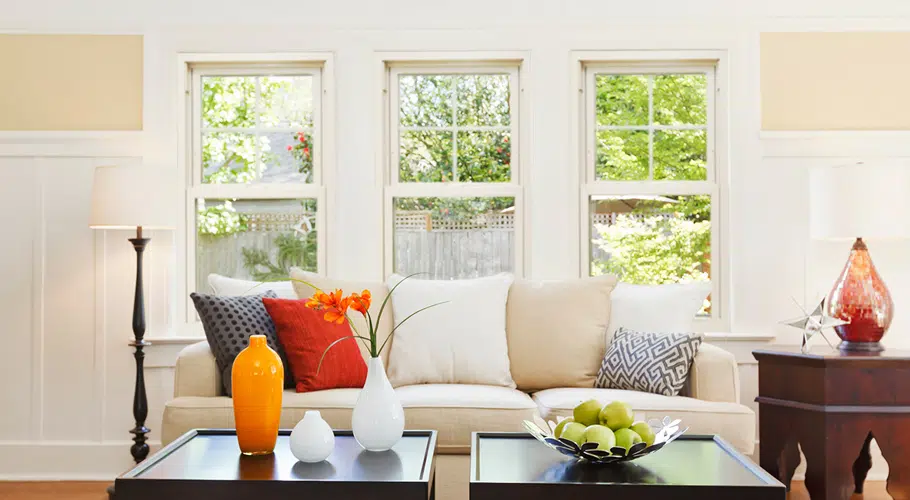
Low-end vinyl windows can be bulky, weak, and poorly assembled. A thicker, cheaper frame reduces the glass area and can make the home feel darker and look worse once the windows are installed. Vinyl is not the most durable material on this list, but at its best it delivers strong energy performance, minimal maintenance, and a solid lifespan at a price point that works for most budgets.
Composite and Fiberglass Windows: The Strongest Long-Term Value
If durability is the priority, this is where the conversation starts. Durable composite frames combine fiberglass strength with the welding properties of vinyl, which means tighter corners, better rigidity, and a frame that holds its shape through temperature swings better than standard vinyl.
Fiberglass expands and contracts at nearly the same rate as glass. That matters in Nebraska where the temperature range between seasons is extreme. A frame that moves with the glass rather than against it holds its seal longer and puts less stress on the system over time.
Not all composite products deliver the same performance. Look inside the frame construction before making a decision based on the label. Multi-chambered frames add rigidity, insulation, and durability. Single-chamber composite may look similar from the outside and perform very differently over ten years.

Composite and fiberglass windows cost more upfront than vinyl windows. For homeowners who plan to stay in the home long term, the combination of durability, energy performance, low maintenance, and a longer service life makes fiberglass the strongest long-term value in most replacement situations.
Aluminum: Strong and Sleek but Not for Every Climate
Aluminum is dimensionally stable, impact resistant, and allows thinner frame profiles with larger glass areas. For modern architectural styles, large openings, or commercial applications it has real advantages.
The challenge in Nebraska is energy performance. Aluminum conducts heat and cold readily. Without a strong thermal break, a non-conductive barrier inside the frame that slows heat transfer, an aluminum window will underperform in a cold climate regardless of how well it is made.
If the materials are the right fit for the design, demand extruded aluminum construction and a quality thermal break. Used correctly aluminum windows are a strong product. Used in the wrong application it is an energy problem.
Aluminum-Clad Wood: The Premium Option That Earns Its Price
Aluminum-clad wood gives homeowners a warm wood interior with a lower maintenance replacement material. For homes where interior wood character matters it is one of the more compelling combinations available.
Two things to know before buying:
First, look at how the cladding is constructed. Durable materials use extruded aluminum on both the frame and sash. Avoid roll-form, which is a thinner exterior skin applied over the wood. It can fade inconsistently, contribute to moisture problems, and compromise the wood behind it over time.
Second, finish durability matters. In high-wind and high-sun environments, a premium paint finish holds up significantly better than a standard one. These windows carry a higher price but for the right home they deliver aesthetics, durability, and manageable maintenance that all-wood windows cannot match.
Wood Windows: When They Make Sense and When They Do Not
Wood offers warmth and character that no other materials can fully replicate. For historic homes or interiors where authentic wood character is non-negotiable, wood windows remain a legitimate choice.
The tradeoff is maintenance. Wood windows require more consistent attention than any other window option. In Nebraska’s climate, wood that is not properly maintained deteriorates faster than it would in a more forgiving environment. If wood is the right call, product selection matters. Look for high-quality manufacturers, proper wood preservatives, and clear exterior wood rather than finger-jointed exterior construction.
For most Nebraska homeowners doing a standard window replacement, wood is not the practical choice. When the design or historic need justifies it, a wood window installed and maintained correctly can last for generations. When it does not, the maintenance burden is not worth it.
The Glass Package Matters as Much as the Frame
Most of a window’s surface area is glass. Which means the glass package is one of the most important energy decisions in the entire replacement process, and it gets far less attention than frame material.
A well-specified glass package in an average frame will outperform a premium frame with basic glass every time. What actually matters:
– U-factor measures how well the window resists heat loss.
– Lower is better in Nebraska winters.
– Solar heat gain coefficient measures how much solar energy passes through. The right number depends on window orientation.
– Low-e coatings reflect infrared energy and reduce heat transfer without meaningfully reducing visible light.
– Argon gas fill between panes slows heat transfer and improves the overall energy performance of the unit.
Double pane with argon and a low-e coating is the baseline for most replacement applications in this climate. Triple pane is worth considering on north-facing windows or in rooms where energy efficiency is a priority.
Do not make the glass decision based on a single number. How the glass looks, how it interacts with the frame, and how it performs across Nebraska’s full range of seasonal conditions all matter in the finished result.
New Construction or Replacement Window: That Decision Affects Everything
This distinction rarely comes up early enough in the conversation and it should. Replacement windows fit inside the existing frame without disturbing surrounding trim or siding. New construction windows have a nailing flange that attaches to the rough framing and require the exterior cladding to be opened up.
The right approach depends on the condition of the existing frame, whether siding or interior work is already planned, and what the installation needs to accomplish. Putting an insert window into a frame with moisture damage or rot solves the wrong problem. The frame needs to be addressed first.
Material selection and installation method are connected decisions. Getting one right without considering the other leads to problems that show up after the job is done.
What TeVelde Recommends for Omaha Homes
For most Nebraska homeowners, our starting point is vinyl or composite windows depending on budget and long-term goals. For homeowners who want the strongest combination of energy performance, durability, and long-term value, composite is where he consistently lands.
For a locally made option built specifically for this climate, TeVelde installs EnerLux windows. A Nebraska manufacturer designing for Nebraska conditions. For homeowners looking at premium brands, TeVelde also installs ProVia, Pella, and Andersen, each with specific product lines that perform well here depending on the application.
The honest answer is that the best windows for your home depend on factors no general recommendation can fully account for. That is the conversation the owner, Todd, has with every homeowner before a specific product goes on the order.
Not Sure Which Window Is Right for Your Home?
The best next step is a free in-home consultation. Todd will look at your existing windows, talk through your goals and budget, and give you a specific recommendation based on your home and your situation.
Call TeVelde and Co. No pressure, no obligation, just a straight answer from a contractor who has been replacing windows in Omaha for over eight years.