Common Causes of Water-Damaged Siding
Knowing where your home’s water issues stem from is the first step in resolving them. Here are a few of the most common causes of water-damaged siding for Nebraskans.
Damaged or Missing House Wrap
The absence or improper installation of house wrap is a leading cause of leaks behind vinyl siding. House wrap, a water-resistant material applied before the siding, acts as a critical barrier. Its taped edges and seams create a continuous surface that channels water away from the building. While vinyl siding repels water, it’s not entirely waterproof. House wrap plays a vital role in protecting your home’s walls from water intrusion. Damaged or missing house wrap allows water to penetrate the wall system, potentially leading to significant problems.
Flashing Round Vinyl Siding
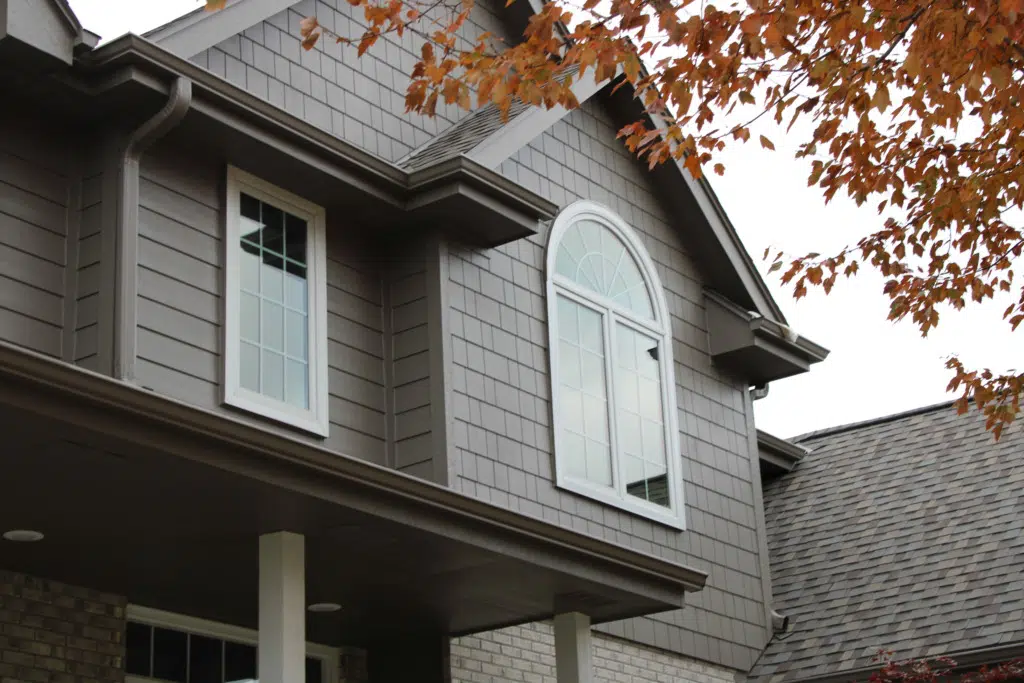
Improperly installed or neglected flashing and transitions are another significant cause of leaks behind vinyl siding. Z-flashing, a custom-made metal component, is crucial at junctions where siding meets windows or doors. It should be installed behind the house wrap and extend outward over the window frame. Flawed installation or lack of maintenance in these areas can lead to water infiltration.
Similarly, transitions between siding and roofing materials are potential leak points. Here, house wrap should be carefully sealed or integrated over the existing roof flashing. Unfortunately, this area is often overlooked, making it a frequent source of siding leaks.
Aged or Cracked Vinyl Siding
Over time, vinyl siding panels can become brittle and less resilient to the elements. While this usually takes somewhere between 25-30 years for quality siding, it’s something you’ll eventually have to consider as a homeowner. Aging, cracked, or loose siding is particularly susceptible to water infiltration, as these defects make room for moisture to seep in behind the panels. One of the best ways to mitigate this is by planning regular inspections! Our vinyl siding experts can help identify these vulnerabilities early and replace damaged sections of the siding to prevent extensive damage throughout the years.