logo

Omaha Area Home Exteriors Company
Family Owned and Operated

Tevelde and Co.

Call Us:

(402) 699-2670

Siding vs Stone Facade

The material you choose for your home exterior changes how the house looks from the street, how it handles hail and wind, how much maintenance you sign up for, and how much you will spend now versus later. We have walked homeowners through this decision for years around Omaha and the surrounding communities.

In this guide, we will compare traditional siding vs stone façade options. We will cover how each system is built, what drives cost, how repairs work, what maintenance feels like over time, and what tends to hold up best in Nebraska’s weather. By the end, you should be able to look at your home, your budget, and your priorities and feel confident about what makes sense.

Book A Free Home Exterior Consultation

    Siding vs. Stone Facade: Which Exterior Makes Sense for Your Nebraska Home?

    When most homeowners say “stone exterior,” they usually mean one of three things:

    • ● Full-bed stone is the traditional masonry look where thick stone is part of the wall assembly. It is heavy, slow to install, and uncommon for most residential retrofits because it can require structural changes.
    • ● Natural stone veneer is real stone cut thin and installed over a wall system, so it delivers the texture and depth people want without building a full masonry wall.
    • ● Manufactured stone veneer is also common. It is molded and colored, typically cement-based, and designed to mimic natural stone. Some homes also use panelized stone systems, which can speed up installation because the pieces are manufactured as panels rather than individual stones.

    Siding is a broader category than many people realize. In Nebraska, the most common choices we discuss are vinyl siding, fiber cement siding (many homeowners know the James Hardie brand), and engineered wood siding (LP SmartSide). Each siding type has its own price point, maintenance pattern, and performance strengths, so “siding” is not one single thing. The right comparison is usually “which siding type versus which stone system,” tied to how your home is built and what you want the finished exterior to do.

    Our Most Common Recommendation: Siding With Stone Accents

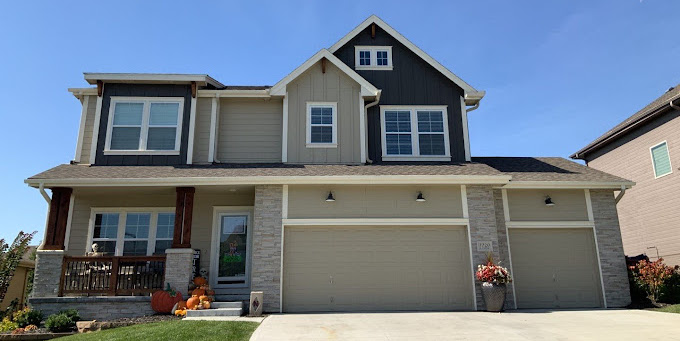
    In many cases, the best answer is a combination. We often recommend siding across the main elevations for performance and consistency, paired with stone accents where they add the most visual value. That approach keeps the project cost controlled and reduces the amount of detail-heavy stone work, while still giving you the upgraded look that made you consider stone in the first place. It also keeps future maintenance simpler because most of the home uses one primary cladding system with predictable upkeep.

    When Full Stone Coverage Makes Sense

    High-end builds and major remodels sometimes justify full stone coverage, especially when the project already includes structural planning and budget for complex detailing. If you plan to own the home for a long time and you love the stone look enough to commit to it, it can be a satisfying choice. It still needs a correct wall assembly and a disciplined installation, but the finished result can be outstanding when those pieces are in place.

    When Siding Is the Clear Winner

    If you want predictable maintenance, a faster installation timeline, and a strong value-per-dollar upgrade, siding usually delivers. If you are also updating windows, correcting trim issues, improving ventilation, or tackling comfort problems inside the home, a siding project lets you address multiple exterior performance issues at once. Those improvements show up in comfort, appearance, and reduced risk of water damage.

    nebraska home exterior services
    geometric house siding windows Nebraska

    Comparing a Stone Facade vs. Siding

    Curb Appeal and Design: How Each Option Looks on Real Homes

    Aesthetics are often the reason stone comes up in the first place. Stone can give a home a more premium front elevation, especially around the entry, porch columns, and lower wainscot areas. It adds texture and shadow lines that can look sharp from the street. Siding is more flexible for full-house coverage and color changes. If you want a cohesive exterior refresh with new trim, soffits, fascia, and a consistent color palette, siding gives you a straightforward path.

    Cost Comparison

    Cost is usually the next question, and it is also where people get tripped up by generic “national averages.” In the Omaha area, pricing depends heavily on the home’s complexity, how much tear-off is involved, wall repairs, access, and material selection. With siding, the big cost drivers tend to be tear-off and disposal, repair work behind the existing cladding, the amount of trim and detail work, and the material itself. A simple one-story ranch with straightforward walls is a different job than a two-story home with multiple gables, bump-outs, and detailed window trim.

    Stone façade work is typically more labor-intensive, and labor is what moves the price. Veneer systems need substrate preparation, drainage and termination details, careful layout, cutting, corner work, mortar steps, and clean-up. If you are considering stone across a large portion of the home, the project becomes more complex quickly. Even stone “accents” often require more prep and finishing time than homeowners expect.

    Long-Term Cost of Ownership

    Long-term cost of ownership matters just as much as the initial invoice. With most siding products, maintenance is straightforward. You rinse or wash the exterior periodically, keep an eye on sealant joints around windows and penetrations, and manage gutters and downspouts so water is not dumping onto the wall. Fiber cement and some engineered wood systems may need repainting at a point in their life cycle, and that should be part of the decision. With stone veneer, long-term costs can show up as mortar joint repair, stain removal, and addressing drainage issues if water is not moving away from the façade as it should.

    Durability

    Durability is often where people assume stone wins automatically. Stone can be very durable, but veneer systems are only as strong as the installation details. A well-installed stone veneer holds up well. A poorly installed system can crack, stain, or even separate in sections. Siding can also be very durable when matched to local conditions. Fiber cement is stable and resistant to many common exterior issues, but it can chip from hard impacts and may need paint maintenance. Engineered wood has improved significantly over time and performs well when installed properly with attention to edges and moisture protection. Vinyl is popular because it is cost-effective, low maintenance, and available in many styles, though it can crack in severe impacts and may show damage after significant hail depending on the product.

    Maintenance and Cleaning Expectations

    Siding generally benefits from a periodic wash, attention to gutters, and checkups around sealant points. Most homeowners can handle this without special tools. You do not need aggressive pressure washing, and in many cases you should avoid it. A garden hose, gentle cleaning solutions, and low-pressure rinsing are usually enough.

    Stone veneer can also be cleaned, but it is more prone to visible staining when water management around the home is weak. Downspouts that dump water near the façade, sprinklers that hit the wall, and soil piled up too high against the house can all create stains and moisture problems. If you like the idea of stone, we plan the project around keeping water away from the veneer and giving the wall a reliable path to dry.

    Energy Efficiency and Comfort

    The exterior finish itself does not magically fix drafts. Comfort is usually improved when the project includes air sealing, insulation upgrades where appropriate, and better detailing around openings. Siding projects can be a good time to improve air sealing around window perimeters, address gaps at the rim area, and evaluate insulation strategies that work with the wall assembly. 

    Stone veneer has thermal mass, but mass is not the same as insulation. In winter, what matters most is limiting air leakage and managing moisture, especially when indoor air is warm and the exterior is cold. We focus on assemblies that stay dry and perform predictably.

    Installation Complexity and Timeline

    A typical siding project involves evaluating the existing exterior, planning tear-off, checking the condition of the sheathing and framing, addressing any rot or damage, installing or upgrading the water-resistive barrier, and then completing the trim and siding installation with clean transitions. Window and door flashing details are a big deal. 

    A stone veneer project usually adds more steps. The substrate has to be right for the chosen system. Drainage and termination details have to be planned before any stone goes up. Layout matters because you want consistent lines, clean corners, and a look that fits the proportions of the home. Mortar work needs suitable conditions, and cure time matters. There are also more decisions to make about transitions at windows, doors, and grade lines. These are not reasons to avoid stone. They are reasons to choose your installer carefully and make sure the plan is complete.

    How to Choose Your Exterior Design

    If you want a straightforward decision guide, here is how we frame it during consultations. Siding is often the right choice when you want a whole-house refresh, you want flexibility in color and style, you want a faster installation window, and you want repairs to stay relatively simple in the future. Stone veneer is often the right choice when you want a premium focal point, you are comfortable with higher labor costs, and you want texture and depth on the front elevation. A hybrid approach is often the best fit when you want that stone look in the areas that matter most from the street while keeping the rest of the project efficient and predictable.

    Mixing Exterior Materials: A Practical Approach That Often Looks Best

    Many homeowners end up choosing a mixed-material approach because it balances curb appeal and budget. Stone accents paired with siding can look intentional when the proportions are right and the transitions are clean. Popular placements include the lower front elevation as a wainscot, around an entry, or on a garage bump-out. Board-and-batten or lap siding with stone accents can work well too, provided the trim package is designed to tie everything together and the color palette is consistent.

    We often encourage homeowners to pick one primary material and one accent material, then make the trim consistent across the whole elevation. When the plan is simple, the finished exterior usually looks more expensive, even when the budget is controlled.

    How Tevelde and Co. Can Help With Your Exterior Upgrades

    If you are still weighing siding vs. stone for your home, we can help you choose a path that fits your budget, your style, and Nebraska weather realities. We start with an on-site visit where we assess the current exterior, focus on moisture-prone areas, and discuss the look you want from the street. Then we recommend material options and a scope that makes sense, including a plan for flashing and water management.

    Tevelde and Co. serves homeowners across the Omaha metro and surrounding communities. If you are considering new siding, stone accents, or a full exterior refresh that includes trim and window coordination, reach out for an estimate. We will give you clear recommendations, explain the cost drivers, and help you feel confident about what you are paying for and what you are getting back in performance and curb appeal.

    Get a Quote for Siding, Stone Accents, or a Full Exterior Redesign

    If you are ready to compare siding, stone accents, or a full exterior redesign, we can help you price it out and see the options side by side.

    (402) 699-2670
    Go To Top