Choosing siding is not a small decision. For most homeowners we work with across Omaha and eastern Nebraska, siding replacement typically occurs only once or twice in a lifetime. When you are about to invest that much money into your home’s exterior, you want confidence that the product will hold up, look right, and not create headaches five or ten years down the road.
We get one question more than almost any other during siding consultations. How does James Hardie compare to other siding brands?
This page walks through that question in plain language. We will look at James Hardie alongside vinyl, engineered wood, traditional wood, and metal siding. We will explain how each performs in Nebraska weather, what maintenance really looks like, and where homeowners tend to be happiest with their choice.
If you’re spending money to improve your home, you want to know it will last. Siding is about long-term protection from rain, hail, heavy winds, and those deep-freeze Nebraska winters. The brand you pick affects how well your siding stands up to all of it.
Some brands are built for strength and color retention, others for low cost or quick installation. And not every product performs the same in our climate. Nebraska siding takes a beating. Hot summers. Cold winters. Strong winds. Hailstorms that show up fast and leave damage just as quickly. Siding that performs well in mild climates can struggle here if it was not designed or installed with these conditions in mind.
Brand choice matters because it affects:
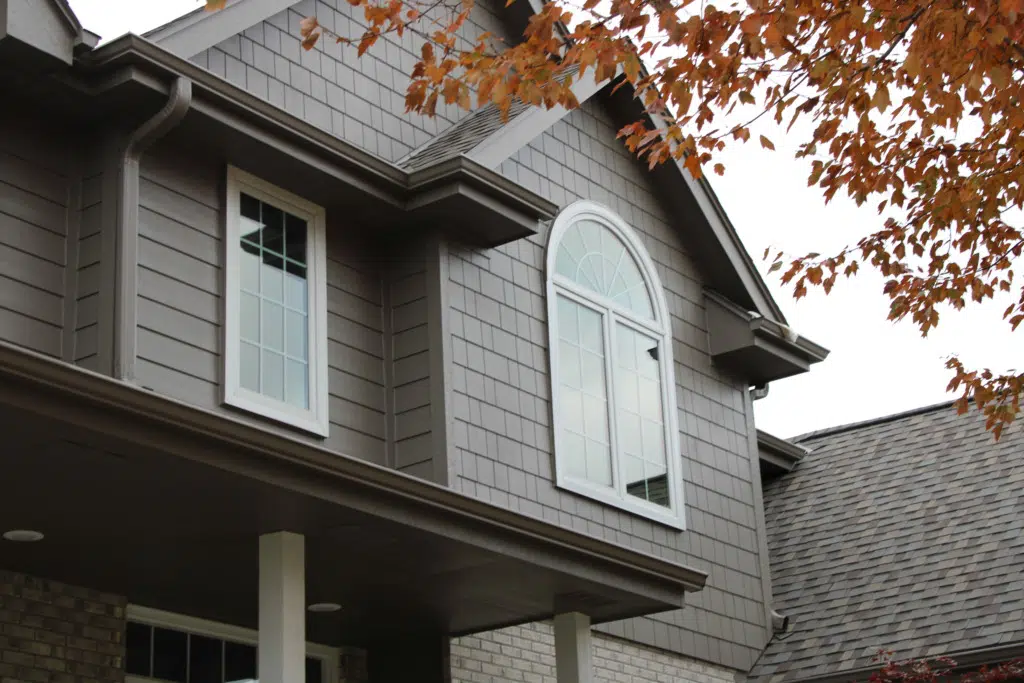
James Hardie siding is fiber cement. That means it is made from a mix of cement, sand, water, and cellulose fibers. Once installed, it behaves more like masonry than plastic or wood. It does not soften in heat, and it does not rot when exposed to moisture.
This composition gives it weight and rigidity, which affects both durability and installation requirements. Homeowners usually see James Hardie offered in several profiles, including the following:
These options allow for flexibility in style without changing materials. Homeowners who choose James Hardie often prioritize a uniform appearance across broad wall surfaces, strong resistance to moisture and insects, and a sturdy, substantial feel after installation. It is commonly selected by those planning to stay in their home for many years and who value long-term performance and stability over a lower initial cost.

Homeowners often compare James Hardie and vinyl siding because both are widely available and used across many neighborhoods. The differences become clearer when durability, appearance over time, and long-term maintenance are examined closely.
James Hardie siding generally handles hail and wind-driven debris better than vinyl. Vinyl panels can crack or break under impact and tend to expand and contract with temperature shifts, which can affect alignment over time. Fiber cement remains more dimensionally stable, helping seams and courses stay consistent.
Fiber cement siding offers deeper texture and more defined shadow lines that hold up well on large wall areas. Vinyl often appears flatter at close range and may fade unevenly after years of sun exposure. Factory-applied finishes on James Hardie typically retain color more evenly over long periods.
Vinyl siding avoids repainting but usually requires full panel replacement when damaged, which can be difficult to blend visually. James Hardie may need repainting after many years, yet individual boards can often be replaced without disrupting surrounding areas.
Vinyl siding carries a lower upfront price. James Hardie usually costs more at installation but tends to preserve appearance longer, which appeals to homeowners focused on resale value or extended ownership.
Engineered wood and fiber cement are often compared because both aim to improve durability while maintaining a traditional look. Their differences are most apparent in moisture handling, impact behavior, and warranty structure.
Engineered wood performs well when installation details are carefully managed, especially at cut edges and flashing points. Fiber cement does not rely on surface coatings in the same way and offers inherent resistance to rot, which can reduce moisture-related concerns over time.
Both materials perform better than vinyl during storms. Engineered wood provides some flexibility under impact, while fiber cement offers greater rigidity. In hail-prone areas, each material can perform reliably, though damage tends to present differently.
Warranty terms vary by manufacturer and product line, with specific installation requirements that affect coverage. We help homeowners review warranty language carefully so expectations match real-world conditions.
This comparison often comes down to maintenance commitment and long-term appearance. Wood siding delivers a classic look, while fiber cement focuses on consistency and reduced upkeep.
Wood siding requires regular attention, including shorter paint cycles and routine moisture monitoring. James Hardie significantly reduces the frequency of exterior maintenance, which suits homeowners who prefer fewer long-term projects.
Natural wood develops character as it ages, along with visible wear such as cracking, peeling, and discoloration. Fiber cement maintains a more uniform appearance across decades when properly installed and maintained.
Wood siding may start at a lower price point, but it often accumulates higher costs through maintenance and repairs. James Hardie provides more predictable expenses over time, which simplifies long-term planning.
Metal siding and fiber cement serve different design and performance priorities. The comparison often centers on durability, energy considerations, and how each material fits into residential settings.
Metal siding resists insects and moisture effectively. James Hardie offers similar resistance while maintaining a traditional residential appearance that many homeowners prefer.
Energy efficiency depends largely on insulation and wall assembly beneath the siding. Both Materials rely on proper installation rather than the siding alone to influence indoor comfort.
James Hardie integrates easily into a wide range of architectural styles and established neighborhoods. Metal siding tends to suit modern, industrial, or agricultural designs more naturally.
We’ve helped hundreds of Nebraska homeowners upgrade their exteriors with new siding. Want to see real samples or get a free estimate? Contact us today.
(402) 699-2670