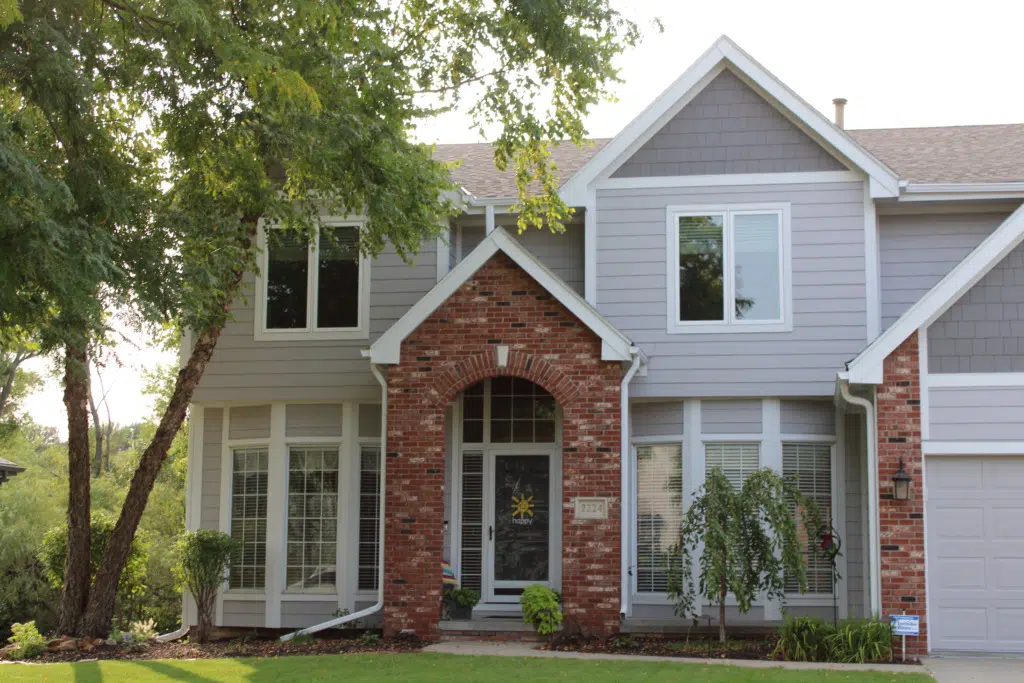
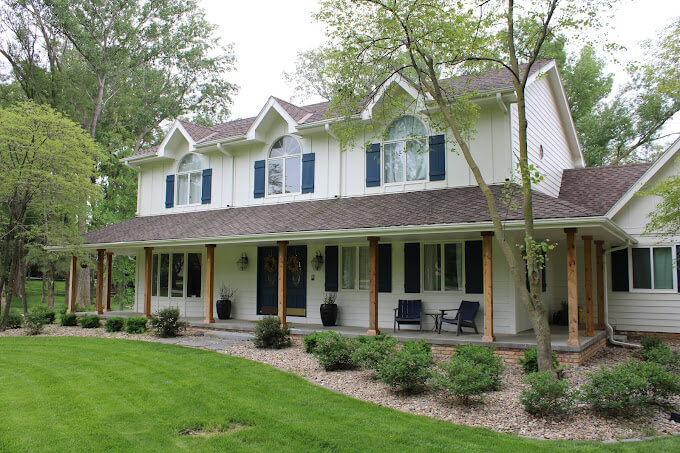
Tevelde and Co. installs James Hardie siding for homeowners throughout Omaha and nearby communities. Our team can replace worn siding, update an older exterior, or coordinate siding installation with windows, roofing, painting, and other exterior improvements.
As a James Hardie Elite Preferred Contractor, Tevelde and Co. has product-specific experience with Hardie Plank lap siding, vertical panels, board and batten siding, shingle siding, trim, and soffit products. Contact Tevelde and Co. to schedule a James Hardie siding estimate for your Omaha home.
Omaha homes experience wide temperature changes throughout the year. Hot summers can be followed by freezing winters, and severe storms can bring strong wind, hail, and heavy rain. An exterior siding system must be installed correctly and made from materials that can handle those conditions.
James Hardie fiber cement siding is manufactured from cement, sand, cellulose fibers, and water. The finished product has the appearance of painted wood siding without many of the maintenance concerns associated with natural wood.
Fiber cement siding remains stable through temperature changes. It does not expand and contract as much as some lighter siding products, which can help the exterior retain its shape and alignment.
James Hardie siding is also designed for specific climate zones. Products selected for colder regions are manufactured to handle freezing temperatures, moisture, and seasonal weather changes.
Correct installation remains important. Proper fastening, clearances, flashing, and water management help the siding perform as intended.
Wood siding can absorb water when paint fails, joints open, or moisture reaches unfinished areas. Repeated exposure may lead to swelling, decay, or peeling paint.
Fiber cement does not rot like natural wood. It can still be affected by long-term water exposure if it is installed against soil, roofing, concrete, or other surfaces without the required clearance. A qualified contractor should follow James Hardie installation instructions around windows, doors, decks, rooflines, and other vulnerable areas.
James Hardie fiber cement products are noncombustible. This means the material will not ignite when exposed to a direct flame under normal testing conditions.
Noncombustible siding does not make a home fireproof. Roofing, insulation, decking, windows, landscaping, and other building materials also affect fire exposure. However, fiber cement siding provides an advantage over combustible exterior products.
Fiber cement does not provide a food source for termites or other wood-damaging insects. It is also less likely to attract woodpeckers searching for insects beneath the siding.
This can reduce the need for repairs related to pest damage. Homeowners should still maintain landscaping, seal openings, and inspect other wood components around the exterior.
James Hardie siding is designed to resist cracking, warping, and deterioration when it is installed and maintained correctly. It provides a solid exterior surface with defined edges and consistent shadow lines.
Maintenance typically involves occasional cleaning, inspection of caulked areas, and repainting when needed. Factory-finished products may require less immediate maintenance than siding that is painted after installation.

James Hardie manufactures several siding profiles that can be used across an entire home or combined to create architectural details. Tevelde and Co. can help homeowners choose products that fit the house, surrounding materials, and preferred design.

Lap siding works well on ranch homes, two-story homes, craftsman houses, colonials, and many contemporary designs. Homeowners can choose from different textures, widths, exposures, and colors.
A narrower exposure often creates a more traditional appearance. Wider boards can give the exterior a cleaner and more modern look.

Vertical siding can make gables and upper stories stand out. It can also add contrast when paired with horizontal lap siding.
Some homeowners use vertical siding across the entire exterior. Others limit it to entryways, additions, dormers, or prominent architectural sections.

Shingle siding can break up large wall areas and add detail to an otherwise simple exterior. It can be painted to match the main siding or finished in a contrasting color.
Because the shingles are made from fiber cement, they resist rot and pest damage better than natural cedar.
Board and batten siding uses wide vertical panels with narrow strips installed over the seams. This creates deeper vertical lines and a more defined exterior pattern.
The style is common on farmhouse-inspired homes, but it also works with craftsman and contemporary designs. Board and batten siding can be used across the full home or limited to gables and upper levels.
The width and spacing of the battens affect the finished appearance. Proper planning helps keep spacing consistent around windows, corners, and other exterior features.
Trim helps define the edges of a siding project. Hardie Trim boards can be installed around windows, doors, outside corners, rooflines, columns, and other exterior features.
Trim width plays a large role in the final appearance. Wider trim may suit traditional or craftsman homes, while narrower trim may work better with some modern designs.
Trim color can match the siding or provide contrast. White, cream, gray, black, and natural tones are common choices.
Hardie Soffit products are installed beneath roof overhangs, porch ceilings, and other horizontal exterior areas. Vented soffit helps support attic airflow, while nonvented soffit provides a finished surface where ventilation is not required.
Replacing soffit during a siding project can create a more consistent appearance. It also gives the contractor an opportunity to inspect fascia, ventilation openings, and nearby roof edges.
Color affects how the home looks from the street and how well the siding coordinates with the roof, brick, stone, windows, and trim. James Hardie siding is available with a factory-applied finish or as a primed product that is painted after installation.
ColorPlus Technology is James Hardie’s factory-applied finish. The color is added under controlled manufacturing conditions before the material reaches the jobsite.
Factory finishing provides consistent coverage across the boards. It is designed to resist fading, chipping, peeling, and cracking.
ColorPlus products still require proper handling during installation. Cut edges and approved touch-up areas must be finished according to the manufacturer’s instructions.
Primed siding arrives ready for field painting. This gives homeowners access to a wider range of custom exterior colors.
Field painting may be the better choice when the home needs a very specific color or must match an existing structure. The paint should be compatible with fiber cement and applied according to the siding and paint manufacturers’ requirements.
Weather conditions can affect field painting. Temperature, humidity, drying time, and surface preparation all influence the final result.
Start with exterior materials that are unlikely to change soon. These may include the roof, brick, stone, window frames, garage doors, and permanent hardscaping.
A warm brick exterior may pair well with cream, tan, muted green, or warm gray siding. Dark roofing may work with light siding, medium gray, blue, or deeper earth tones.
Natural light also affects color. A siding sample can appear different in direct sun, shade, and evening light. Reviewing samples against the home can help avoid surprises.
Many Omaha homeowners combine siding styles to add detail without making the exterior feel busy.
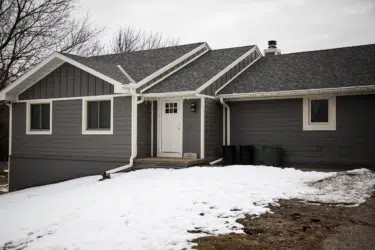
Lap siding can cover the main walls while board and batten is used in front-facing gables. Shingle siding may work well above a garage or near an entry. A contrasting trim color can help define windows, rooflines, and corners.
The best combinations support the architecture of the home. Product changes should follow natural transitions rather than being added without a clear visual reason.
James Hardie contractor designations help homeowners identify companies with experience installing the manufacturer’s products.
An Elite Preferred Contractor must meet program requirements established by James Hardie. These may include training, business standards, installation practices, licensing, insurance, and customer service expectations.
The designation does not remove the need to review the contractor’s proposal, references, warranty terms, and project scope. It does provide an added level of product-specific qualification.
Tevelde and Co. has experience with James Hardie siding, trim, soffit, flashing details, clearances, and exterior transitions found on Omaha homes.
Tevelde and Co. is a locally owned exterior remodeling company serving Omaha and nearby communities.
Local Exterior Experience: Local experience matters when selecting materials for Nebraska weather. Our team understands the temperature changes, storms, wind, and moisture conditions that Omaha homes face. We also work with a range of local home styles, including ranch homes, craftsman homes, two-story traditional houses, and newer suburban construction.
James Hardie Product Knowledge: Tevelde and Co. installs James Hardie lap siding, vertical panels, board and batten siding, shingle accents, trim, and soffit. Our team can help homeowners choose products that work together and fit the proportions of the home.
Complete Exterior Remodeling Capabilities: Siding is often connected to windows, roofing, fascia, soffit, gutters, and exterior paint. Tevelde and Co. can evaluate these components during the planning process. This can reduce conflicts between contractors and support better sequencing around exterior openings and rooflines.
Detailed Project Planning: A siding project includes more than ordering boards and installing them on the wall. Measurements, material quantities, trim layouts, accent locations, flashing details, staging, cleanup, and weather conditions all affect the project. Our team develops the scope before installation begins and communicates with homeowners as work progresses.
Workmanship Focus: The appearance of fiber cement siding depends on consistent courses, clean cuts, balanced trim, and careful transitions. Performance depends on flashing, water management, fastening, and clearances. Tevelde and Co. addresses both the visible finish and the details behind it.
James Hardie siding is well suited for areas with changing temperatures, moisture, wind, and seasonal storms. Its fiber cement construction resists rot, pests, and combustion. Installation quality is critical. Flashing, fastening, clearances, and water management affect how the siding performs over time.
Fiber cement siding can provide decades of service when it is installed correctly and maintained. Actual service life depends on moisture exposure, paint condition, wall design, installation practices, and repairs. Homeowners should inspect the exterior and address damage promptly.
Fiber cement is a durable siding material and can resist many common impacts. Severe hail can damage almost any exterior product. The size of the hail, wind speed, angle of impact, and condition of the siding all affect the result.
Project length depends on home size, wall complexity, weather, crew size, product availability, and the amount of repair work required. A smaller, straightforward home may be completed faster than a large two-story home with several gables and detailed trim.
James Hardie siding can update the appearance of an Omaha home while providing resistance to moisture, pests, fire exposure, and changing weather. Tevelde and Co. installs James Hardie siding, trim, soffit, vertical panels, board and batten siding, and shingle accents. Contact Tevelde and Co. to schedule an exterior inspection and request a James Hardie siding estimate for your Omaha home.
(402) 699-2670