
For a room that gets hot in direct sun, start by comparing glass that admits less solar heat. For a shaded room that feels cold in winter, focus on insulation and the condition of the window opening. South-facing rooms need a closer look at both winter warmth and summer shade.
At Tevelde & Co., a window evaluation includes tracing drafts and checking how the window closes and seals. Gaps around the opening and a frame that sits out of square affect comfort as well as the glass itself. That distinction matters when you choose replacement windows. A sunny living room and a drafty bedroom need different questions answered before you decide which product to buy.
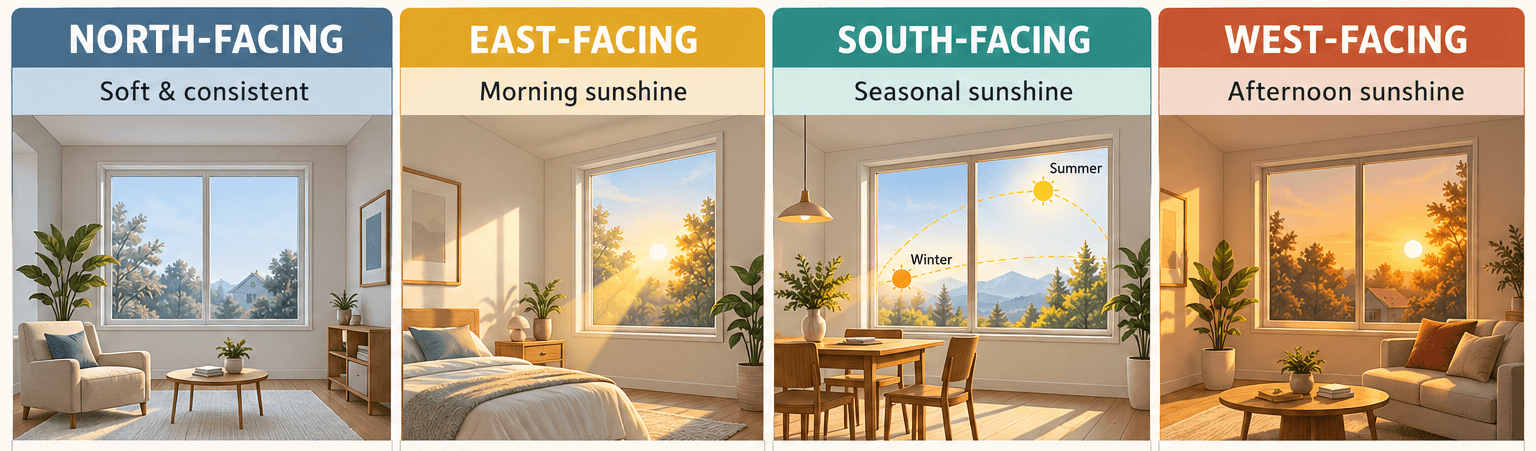
A Quick Guide to Windows by Facing Direction
These are starting priorities for Nebraska homes. The actual shade and the amount of glass in each room affect the final choice.
| Direction | Main Exposure Concern | What to Discuss |
|---|---|---|
| North | Limited direct sun and winter comfort | Low U-factor, daylight transmission, and draft paths |
| South | Useful winter sun and seasonal overheating | Insulation, solar heat gain, and summer shade |
| East | Morning heat and low-angle glare | Glass selection and shade suited to morning room use |
| West | Afternoon heat and glare | Lower solar heat gain and shade for late-day sun |
Best Windows for West-Facing Rooms
West-facing windows deserve attention when a room becomes uncomfortable late in the day. Start with the solar heat gain coefficient, or SHGC. A lower value means the window admits less solar heat. In the living room example above, compare the SHGC of the proposed glass packages. Also check how much daylight each option lets through. A window upgrade should address the heat problem while considering the room’s brightness and view.
Glare needs a separate check. A glass package that limits solar heat still admits visible light. If the sun shines directly across the television or into the seating area, an adjustable shade remains useful. Take a photo when the glare is worst. It shows the sun’s angle and which part of the room it reaches, even if your consultation takes place earlier in the day.
Best Windows for East-Facing Rooms
East-facing windows receive morning sun. The best choice depends partly on how you use the room during those hours. For a breakfast area, bright morning light might be welcome. For a bedroom used by someone who works nights, light control has greater value. For a home office, the location of the desk and screen matters. Our advice is to describe the specific problem before choosing the glass. A complaint about screen glare calls for a review of direct sunlight and shade. A complaint about heat calls for a comparison of solar heat gain. Both deserve attention if the room has both problems.
Best Windows for South-Facing Rooms
South-facing windows offer useful winter solar warmth. In summer, a properly sized overhang helps shade the glass when the sun is higher in the sky. Review how the room performs through the year. Does winter sun make it more comfortable? Does it overheat in summer? Is the glass shaded by a porch roof or trees? For example, a south-facing room shaded by a tree in summer has different conditions once the leaves fall. Keeping some winter solar gain is worth discussing where the home’s design supports it. For a room with large, unshaded windows that already overheats, controlling solar gain deserves more attention. The right choice depends on the glass area, shade, and heating and cooling needs together.
Best Windows for North-Facing Rooms
North-facing rooms generally receive less direct sun. Low U-factor and useful daylight are the main glass priorities. A lower U-factor means less heat passes through the window. In a cold bedroom, we also review how the window operates and seals. A latch that fails to engage properly or uneven weatherstrip contact deserves attention in the project scope. Suppose that bedroom feels cold on windy nights and air is traced to a gap behind the trim. The opening needs air sealing as part of the work. Selecting an insulating glass package addresses another part of the room’s winter comfort.

How We Separate Sun Heat From a Draft
The time of day when a room feels uncomfortable is a useful starting point. Tell us whether the problem follows the sun, picks up with the wind, or continues through cloudy weather. Those patterns help guide the inspection.
A Room That Heats Up in Direct Sun
Consider a living room with three windows facing an open yard to the west. By midafternoon, sunlight reaches the sofa, and the homeowner closes the blinds to make the room usable. For that room, our advice would be to compare solar heat gain and daylight transmission together. The goal is to reduce unwanted heat while preserving a useful amount of natural light. We would also discuss shade for the low-angle sun that reaches the seating area. That is a different decision from choosing glass mainly to keep winter heat inside. The National Fenestration Rating Council identifies climate, window direction, glass area, and shade as factors in window selection.
A Window That Feels Drafty When the Wind Picks Up
A draft calls for a closer look at the seals and opening. We check whether the gap around the sash is even and whether the lock pulls the sash firmly against the weatherstripping. The sash is the part of the window that holds the glass and, in an operating window, moves. Our draft evaluations also address air leaks behind trim and gaps around the window opening. If air is entering there, the repair or replacement scope needs to address that path.
Cold Air Moving Near the Glass
A cold window surface also cools the room air next to it. That air moves downward along the glass, which feels similar to a draft. The inspection needs to distinguish that movement from outdoor air leaking through a gap. Better-insulating glass addresses heat transfer. Air sealing addresses leakage around the window.
The Glass Options Behind Our Recommendations
Tevelde & Co. installs EnerLux fiberglass windows and is a Pella Preferred Contractor. That gives homeowners specific product options to discuss during a replacement consultation. Window Replacement in Omaha With EnerLux windows, the glass discussion includes several Cardinal Low-E choices. EnerLux lists these options in its glass package guide:
| Glass Option | Manufacturer’s Stated Focus | What to Review for Your Room |
|---|---|---|
| LoE-180 | High solar gain | Whether winter solar warmth suits the room and its summer shading |
| LoE-270 | All-climate performance | The balance of solar heat control and daylight |
| LoE-366 | Low solar gain | Heat control for sunny rooms while retaining daylight |
| LoE-340 | Solar control, including western exposure | Strong sun exposure, daylight needs, and glass appearance |
These options show why the phrase “Low-E glass” needs more detail in a quote. Different coatings serve different purposes. Compare the available package for the window style you choose, including its published whole-window ratings.
Compare the Whole Window’s Ratings
The NFRC label provides a practical way to compare products. For example, a window with an SHGC of 0.25 admits less solar heat than one rated 0.40. Compare their VT values to understand the difference in daylight as well. Use the whole-window rating for the product line, window style, and glass package in your quote. A glass-only rating covers a different scope of performance. ENERGY STAR certification identifies products that meet efficiency requirements for a climate zone. Confirm that the proposed window qualifies for your location, then review the ratings that matter to each room.
| Rating | What It Tells You | How to Read It |
|---|---|---|
| U-Factor | How readily heat moves through the window | Lower for better insulation |
| SHGC | How much solar heat the window admits | Lower when limiting solar heat is the priority |
| Visible Transmittance, or VT | How much visible light passes through | Higher for more daylight |
| Air Leakage, when reported | Air movement through the window assembly under test conditions | Lower for less leakage |
Decide What a Triple-Pane Upgrade Changes
Triple-pane glass adds another pane and insulating space to a double-pane design. Pane count, coatings, gas fill, and frame design all contribute to performance. For a cold room, compare the improvement in U-factor. For a sunny room, compare SHGC too. Request the price difference between the proposed options so you understand the added cost and the change in performance. Frame material belongs in that comparison. Fiberglass, vinyl, and wood offer insulating frame choices, with different finishes and maintenance needs. Compare the complete product when choosing energy-efficient windows.

Why We Look at the Window Opening and Surrounding Siding
Tevelde & Co.’s work includes both windows and siding. Our siding inspections review the surrounding trim, house wrap, and flashing, along with visible damage and moisture concerns around openings. That broader view matters when a window project includes damaged trim or siding work. The scope should explain how the window opening will be prepared and how the installation will connect with the wall’s weather protection. On a project that includes siding removal, exposed wall surfaces also give our team a chance to inspect what was hidden. Damaged sheathing or flashing needs to be addressed as part of the exterior work. The glass choice and the opening’s condition both affect the finished result.
What We Explain Before You Choose Windows
Our replacement process includes measurements, a discussion of your budget and style preferences, and an estimate. We also walk through the project before materials are purchased. Bring your comfort concerns into that discussion. Useful questions include:
- • Which glass package is included for each window?
- • What are its whole-window U-factor, SHGC, and VT ratings?
- • What changes if you choose a different glass package?
- • How will drafts or damage around the opening be addressed?
- • Is there an appearance difference between the glass options?
Those details make the estimate easier to judge. They connect the product choice to the problem you want solved. Installation checks matter too. Before treating a window installation as finished, we check operation, lock engagement, and weatherstrip compression. We also check the gaps around the sash. Those details affect how the unit closes and seals.
Get Help Choosing Windows for Your Home’s Sun Exposure
Tell Tevelde & Co. which rooms feel uncomfortable and when the problem occurs. Bring photos of afternoon glare or notes about drafts to your free window consultation. We will help you review the available products and plan your window replacement around the room’s needs and the condition of the existing opening.