
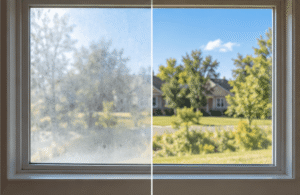
Foggy or cloudy windows can make it seem like the glass needs a good cleaning. But if you wipe both sides of the window and the haze remains, the problem may be inside the glass. This is a common sign of a failed window seal. When the seal around an insulated glass unit fails, moisture gets between the panes. The window may develop condensation, haze, or water spots that you cannot wipe away.
So, can a failed window seal be repaired? Sometimes you can repair the window without replacing the entire unit. However, simply adding new sealant usually cannot restore a failed insulated glass unit to its original condition. Depending on the window, your options may include replacing the glass unit, replacing the sash, or installing a new window. Understanding why the seal failed helps you determine which option makes the most sense for your home.
What Is a Window Seal?
Most modern double- and triple-pane windows contain an insulated glass unit, commonly called an IGU. Instead of using a single piece of glass, an IGU uses two or more panes separated by a spacer. The perimeter of the glass unit is sealed to create an enclosed space between the panes. Depending on the window, that space may contain air or an insulating gas such as argon.
Modern windows also include Low-E glass coatings that help control heat transfer through the window. All of these components work together to improve the window’s thermal performance. The perimeter seal plays an important role because it helps keep moisture and outside air from entering the space between the glass.
What Happens When a Window Seal Fails?
Once the seal fails, outside air and moisture enter the insulated glass unit. If the window was filled with insulating gas, some of that gas may also escape. As temperatures change, moisture inside the glass unit condenses. This creates the familiar foggy appearance associated with broken window seals. Because the condensation is inside the glass unit, you cannot reach it with a towel or glass cleaner.
What Does a Failed Window Seal Look Like?
A failed seal looks different depending on the window and how long the problem has existed. Homeowners should watch for these common signs:
- • Fog or Condensation Between the Glass: Moisture between the panes is one of the clearest signs of seal failure. You may see light fogging, individual droplets, or significant condensation. The amount of condensation may also change with the weather. A window could look relatively clear one day and noticeably foggy another.
- • Cloudy or Hazy Glass: Seal failure does not always produce visible water droplets. Some windows develop a cloudy or milky appearance instead. The haze may become especially noticeable when direct sunlight hits the window.
- • Water Spots or Mineral Deposits Between the Panes: Over time, repeated condensation leaves deposits on the inside surfaces of the glass. These spots remain even when the moisture disappears. Since they are trapped inside the insulated glass unit, normal window cleaning will not remove them.
Does Condensation Always Mean the Window Seal Failed?
No. The location of the condensation matters. Condensation on the interior surface of a window can result from indoor humidity meeting cold glass. Exterior condensation also occurs under certain temperature and humidity conditions. Neither automatically means the window seal has failed. Moisture between the panes of glass, however, strongly indicates that the insulated glass unit has lost its seal.
What Causes Window Seals to Fail?
Window seals are exposed to years of temperature changes, sunlight, moisture, and movement. Eventually, these conditions take a toll on the materials. Common causes of window seal failure include:
- • Normal aging and deterioration
- • Repeated heating and cooling
- • Improper window installation
- • Excessive moisture exposure
- • Movement or warping of the window frame
- • Manufacturing or material defects
- • Prolonged exposure to direct sunlight

Can a Failed Window Seal Be Repaired?
It depends on what you mean by “repair.” Applying caulk or sealant around the outside of the window generally will not repair a failed insulated glass seal. The failed seal is part of the IGU itself. That does not necessarily mean the entire window needs to come out. Depending on the window’s construction and overall condition, you may be able to address the problem through defogging, insulated glass replacement, or sash replacement. In other situations, complete window replacement makes more sense.
Option 1: Window Defogging
Some companies offer window defogging services. The process is designed to remove or reduce moisture trapped between the panes. Defogging may improve the appearance of the window, but it is important to understand its limitations. Removing visible moisture does not necessarily recreate the original factory seal or restore insulating gas that has escaped. For that reason, defogging is generally more focused on improving the appearance of the glass than restoring the IGU to its original performance.
Option 2: Replace the Insulated Glass Unit
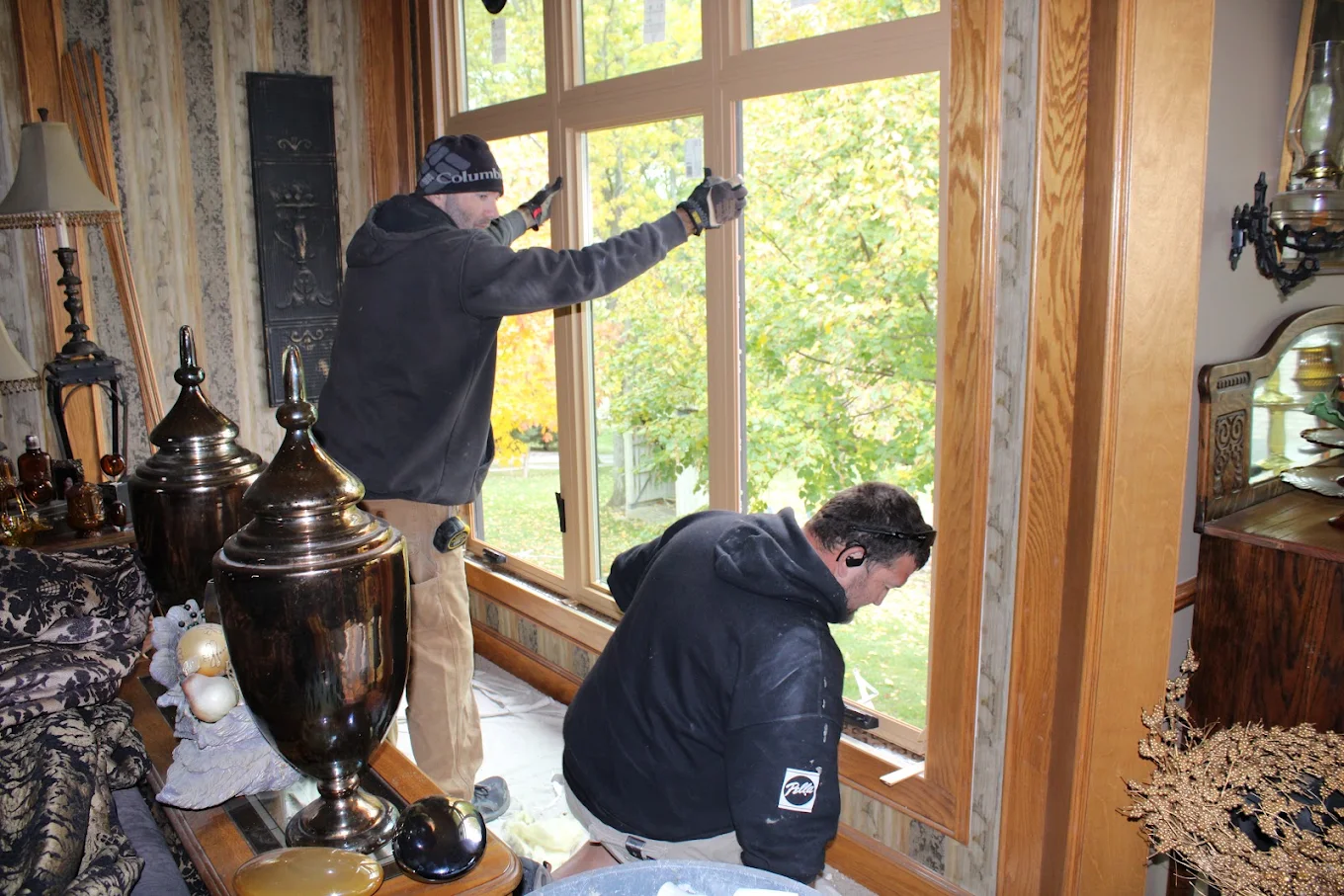
In some windows, professional window installers are able to replace the insulated glass unit without removing the entire window frame. The old IGU is removed and a new sealed glass unit is installed in its place. If the frame and other window components are still in good condition, this addresses the failed glass while retaining more of the existing window. Whether this is practical depends on the window’s design, age, manufacturer, condition, and availability of compatible replacement components.
Option 3: Replace the Window Sash
Another possibility is replacing the sash. The sash is the part of the window that holds the glass. Depending on the window design, replacing the entire sash may be easier or more practical than replacing only the insulated glass. Consider sash replacement when the frame is still in good condition and a compatible replacement sash is available.
Option 4: Replace the Entire Window
Sometimes a failed seal is only one problem with an aging window. If the frame is damaged, the window is drafty, operation has become difficult, or other components are deteriorating, replacing only the glass may provide limited value. A complete replacement addresses the entire window rather than one failed component.
When Is It Better to Replace the Entire Window?
A single failed seal does not automatically mean you need a new window. The condition of the rest of the unit should be considered. Complete replacement may make more sense when:
- • The window is old and has several worn components.
- • Multiple windows throughout the home are experiencing problems.
- • Frames are warped, cracked, rotted, or otherwise damaged.
- • Windows are difficult to open, close, or lock.
- • You feel drafts around the windows.
- • Water is entering around the window opening.
- • Replacement glass or sashes are difficult to obtain.
- • You want to improve your home’s overall window performance.
- • The window has problems beyond the failed glass seal.
A professional window inspection from Tevelde and Co. determines whether the problem is limited to the glass or involves the entire window assembly.
Should You Replace One Failed Window or All Your Windows?
Not necessarily. If one relatively new window develops a failed seal while the rest are performing well, replacing every window in the house may not make sense. Addressing the individual problem may be sufficient. The decision changes when several windows of similar age start developing problems.
Windows installed at the same time have generally experienced similar years of sunlight, temperature changes, wind, and moisture. If several are developing failed seals, drafts, difficult operation, or other problems, it may be worth evaluating the entire group. Consider your windows’ age, overall condition, energy performance, appearance, available replacement components, and how long you plan to stay in the home.
Is a Failed Window Seal Covered by a Warranty?
It may be. Window warranty coverage varies widely by manufacturer and product. Some manufacturers provide specific coverage for insulated glass or premature seal failure. If your windows are relatively new, check the manufacturer’s warranty before paying for replacement glass or a new window.
It is also important to distinguish between a product warranty and an installation or workmanship warranty. A manufacturer’s warranty generally covers qualifying problems with the window itself, while a contractor’s workmanship warranty may cover certain installation-related issues. Check the terms of your specific warranties to determine what is covered.
Failed Window Seal vs. Leaking Window: What’s the Difference?
A failed window seal and a leaking window are two different problems. Finding the source matters because replacing an insulated glass unit won’t fix a leak caused by faulty flashing or another installation issue.
- • A failed insulated glass seal allows moisture into the enclosed space between the panes of glass. The moisture stays inside the glass assembly where you cannot wipe it away.
- • A leaking window allows exterior water to enter around the sash, frame, flashing, or window opening. You might notice wet trim, stained drywall, peeling paint, damp insulation, or water collecting near the window.
Have Tevelde and Co. Inspect Your Nebraska Windows
You do not have to diagnose a foggy or failing window on your own. Tevelde and Co. evaluates your existing windows and determines whether the issue is limited to the glass or whether you should consider replacement. We install replacement windows designed to handle Nebraska’s changing weather while improving your home’s comfort, appearance, and performance.
If your windows are foggy, drafty, difficult to operate, leaking, or simply reaching the end of their useful life, our team helps you review your options. Contact Tevelde and Co. to schedule a consultation for replacement windows in Omaha and the surrounding Nebraska communities.