When most homeowners schedule a siding replacement, they're thinking about panels, colors, and material choices. Gutters rarely come up in that first conversation. But they should. The way gutters are handled before and during a siding project has a direct impact on how well the finished installation performs, how long it lasts, and whether you end up with water problems down the road.
At Tevelde and Co., we've been working on Omaha-area homes for over 25 years. Gutter prep is one of those details that separates a clean, lasting installation from one that causes headaches six months later. Here's exactly what needs to happen before your new siding goes up.
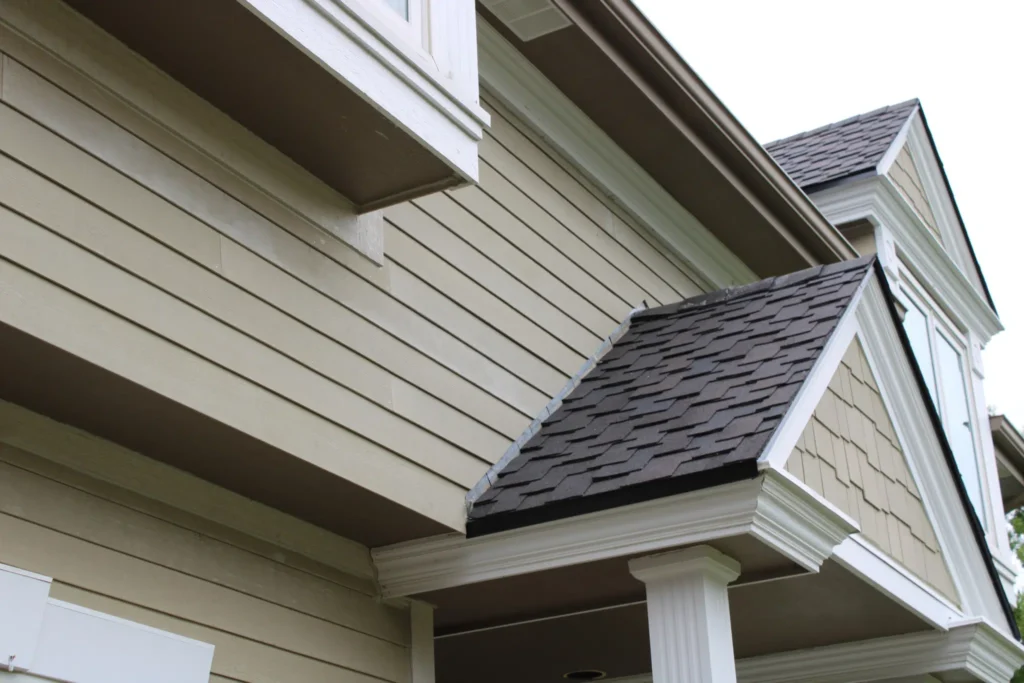
Your gutters don't just hang off the edge of your roof. They attach to the fascia board, which is the horizontal board that runs along the lower edge of your roofline. That fascia sits right at the point where your siding terminates at the top. When a crew installs new siding, they need full, unobstructed access to that entire zone.
If gutters are still in place when siding work begins, the crew can't properly seat the top courses of siding, flash the roofline correctly, or inspect the fascia and soffit for rot or moisture damage. Nebraska weather makes this especially important. Omaha homes deal with hail, heavy rain, and freeze-thaw cycles that accelerate deterioration along that fascia line. Skipping a thorough inspection of that area before covering it with new siding is a mistake we've seen cause real problems.
The short version: gutters and siding share real estate on your home's exterior, and treating them as separate, unrelated systems during a replacement project creates risk.
How you choose to handle removing, reinstalling, or replacing your existing gutter system will have a big impact on how your exterior looks and performs after the siding replacement. There are two realistic options for most homeowners.
The first is remove and reinstall. If your gutters are structurally sound, properly sized for your roofline, and not showing significant wear, they can come down before siding work begins and go back up once the new siding is installed. This is common on homes where the gutters are relatively new or were recently replaced.
The second is remove and replace. If your gutters are more than 15 to 20 years old, showing corrosion, running sectional rather than seamless construction, or simply mismatched with the look of new siding, replacing them at the same time is almost always the smarter financial decision. The labor is already mobilized. Your siding crew is already on-site. Adding a gutter replacement to the scope at that point costs far less than scheduling a separate visit later.
There's a third scenario worth mentioning: working around existing gutters without removing them. Some contractors attempt this. We don't recommend it. The access issues alone compromise the quality of the installation, and the risk of damaging the gutters during siding work is real. Therefore, proper siding installation requires gutters to come down.

Your gutters and your siding are part of the same exterior system that must work together to keep your home safe and dry. At the top edge of your home, gutters attach directly to the fascia board. That fascia sits at the end of the roof rafters and supports both the gutter system and the lower edge of the roof. Just below that line, your siding begins. Trim pieces and flashing connect these layers and guide water into the gutter instead of behind it. When everything is set correctly, water leaves the roof, drops into the gutter, and flows toward the downspouts.
Problems start when that path breaks. A gutter that sits too low allows water to overshoot the front edge during heavy rain. A gutter that is pushed too tight against the house can trap water behind it. If the pitch is off, water collects in sections and spills over in the same spots every time it rains. Those repeated overflow points create concentrated exposure along the siding below.
The connection between gutters and siding also changes during a replacement project. New siding often has a different thickness than what was previously installed. That affects how far the wall surface extends outward. If the gutter position is not adjusted to match that new profile, the system can fall out of alignment. For example, if new trim and siding extend slightly farther out than the old materials, the gutter may need to be repositioned so water still drops directly into it. If that adjustment is skipped, water can run behind the gutter instead of into it.
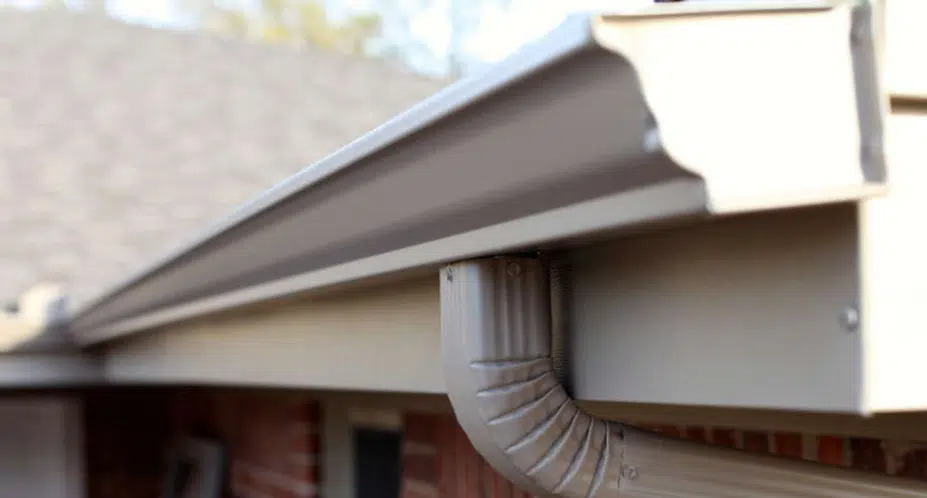
Downspouts complete the system by carrying water from the gutters down and away from the home. If they are clogged, undersized, or poorly placed, water backs up into the gutter. That increases the chance of overflow and repeated exposure along the siding, leading to another siding replacement due to water damage.
When we prepare for siding replacement, we look at all of these components as one system. We check how the gutters are mounted, how the fascia is holding up, how water is currently moving, and where adjustments are needed. This approach keeps water moving in a controlled path. It protects the new siding from the start and prevents the same issues from returning after the project is complete.
Beyond the practical case for replacing aging gutters during a siding project, there's an aesthetic argument worth considering. New James Hardie fiber cement siding has a clean, finished look with precise color options. Old, oxidized aluminum gutters in a mismatched color undercut that investment visually from the moment the project is done.
Seamless aluminum gutters, which we commonly see installed alongside new siding on Omaha homes, are fabricated on-site to fit your roofline exactly. No seams means fewer leak points. When color-matched to your new siding or trim, the finished exterior looks intentional and cohesive rather than like a patchwork of updates from different years.
The financial logic is hard to argue with. If you're already spending on a full siding replacement, adding gutters to the scope while labor is already on-site is the most cost-efficient moment to do it. Waiting until next year means paying mobilization costs again for what is, in many cases, a smaller job.
We've done this process on hundreds of homes across Omaha, Elkhorn, Papillion, Bellevue, and surrounding communities. One situation we see regularly is a homeowner who called us specifically for siding and then, during the pre-project walkthrough, discovered their gutters were contributing to the fascia rot that was accelerating their siding failure in the first place. Addressing both systems in one project resolved the root cause rather than just the visible symptom.
That kind of whole-exterior thinking is what we bring to every estimate. We're not running through a checklist. We're looking at your home as a system and making sure that when we're done, every component we've touched or worked around is in a condition that supports the longevity of your new siding.
Our process starts with a free consultation where we take measurements, assess existing conditions including gutters and fascia, and give you a detailed, customized estimate. No vague ballpark numbers. No surprises mid-project.
We approach every project as a full exterior system.
Our team understands how siding, gutters, fascia, and trim connect. We do not treat these as separate pieces. That perspective leads to cleaner installs and longer-lasting results.
We also know the conditions homes face across Nebraska. Heavy rain, snow, and temperature swings all affect how materials perform. We build with that in mind.
Our process stays organized. You are not coordinating multiple crews or guessing how the work will come together.
In nearly every case, yes. Gutters attach to the fascia at the precise point where the top of the siding installation terminates. Removing them gives the crew proper access to that zone, allows for fascia inspection, and prevents damage to the gutters during siding work.
For a typical Omaha home, gutter removal and reinstallation each add a partial day to the overall schedule. If replacement rather than reinstallation is the plan, that timeline shifts slightly depending on gutter length and configuration.
New siding typically adds a small amount of thickness to the wall surface, which can affect how gutter hangers and spikes align. An experienced installer accounts for this during reinstallation and adjusts hanger placement and pitch accordingly.
Yes, it is practical to install new gutter guards during a siding replacement, because the gutter system is already being adjusted during this process. This also helps ensure that the gutter guards have the correct fit and are properly aligned for drainage.
When gutters are replaced alongside siding, the total cost is often lower than when the work is done separately. The crew already has access to the roofline, and gutters are typically removed during siding installation anyway. This eliminates duplicate labor and reduces setup time. It also creates an opportunity to repair fascia or correct drainage issues while everything is exposed. Addressing these elements simultaneously helps the new siding perform as intended and reduces the likelihood of future repairs due to water mismanagement.
Replacing gutters during a siding project typically costs an additional $1,500 to $3,000 for a standard home using seamless aluminum gutter sections. Higher-end projects can range from $2,500 to $5,000, depending on materials, layout, and upgrades.
If you're planning a siding replacement in the Omaha area and want a contractor who will assess your gutters, fascia, and full exterior before a single panel goes up, we'd like to hear from you. Call us at (402) 699-2670 or fill out our online form for a free, no-obligation estimate. We'll come to your home, take a thorough look, and give you a clear picture of exactly what your project involves.
(402) 699-2670