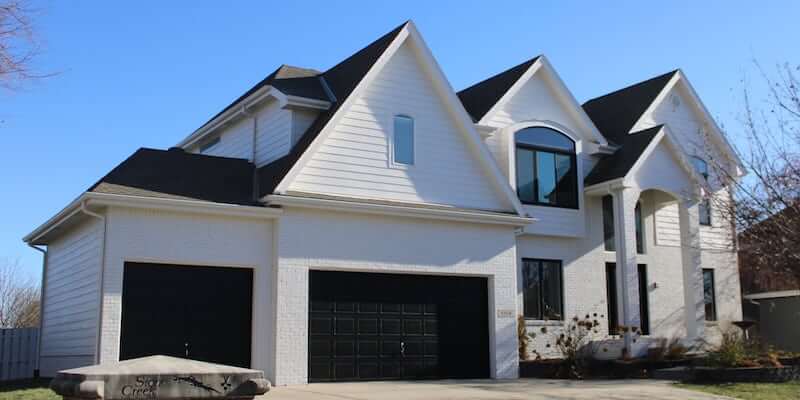
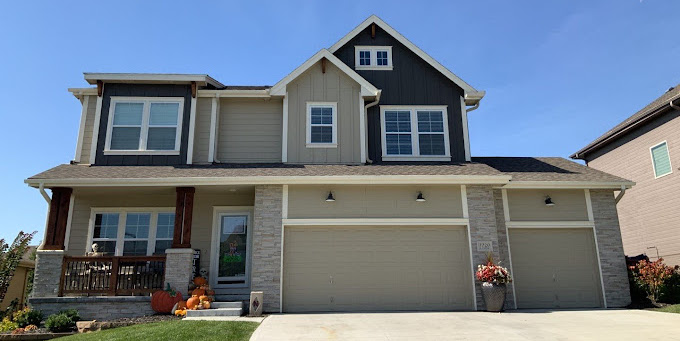
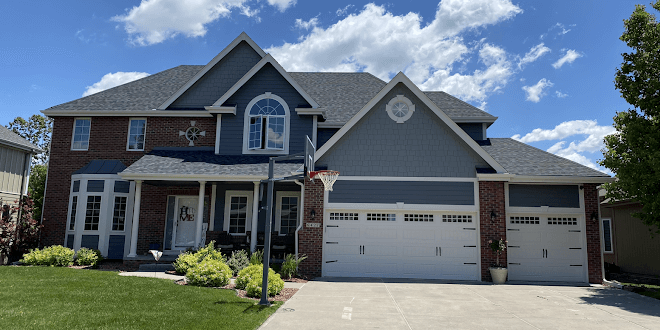
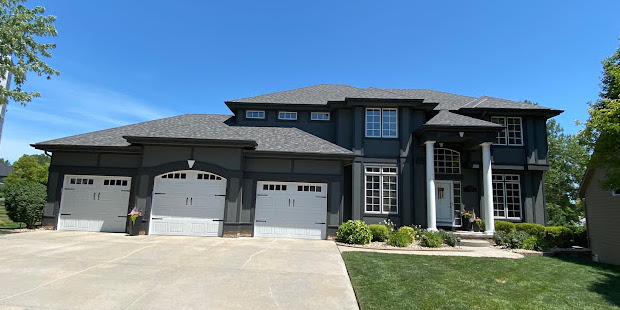
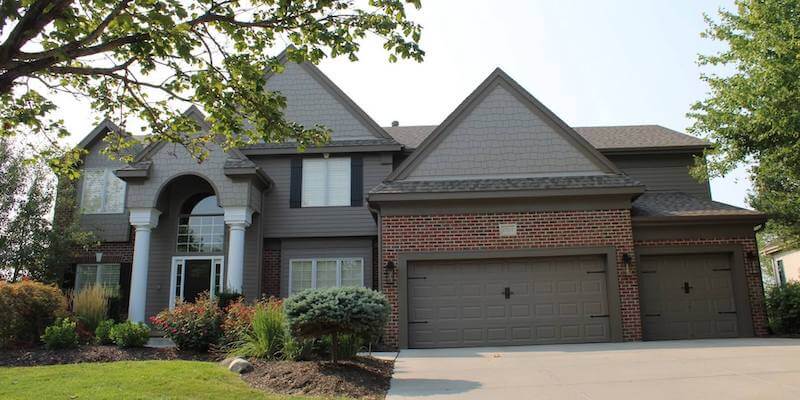
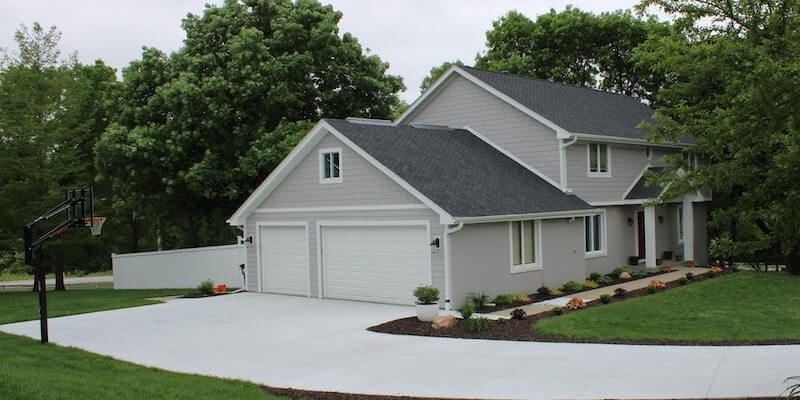
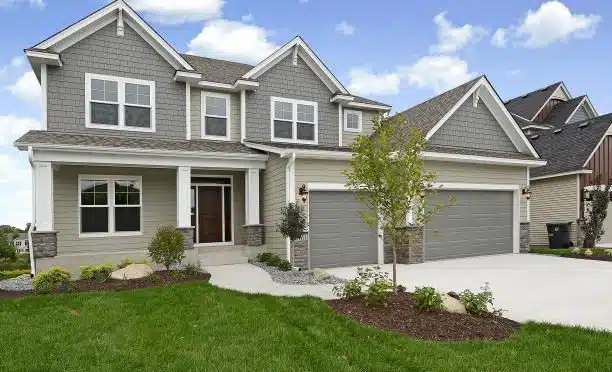
Colonial siding refers to traditional horizontal siding profiles that reflect the look of early American architecture. The style dates back to the 17th and 18th centuries, when homes were built with simple, straight lines and symmetrical features. Colonial homes often include centered doors, multi-paned windows, and horizontal lap siding.
The siding itself is designed to mimic the original wood boards used in those early homes. Today’s Colonial siding is available in multiple materials, including fiber cement, vinyl, and engineered wood. Each is designed to provide lasting performance without sacrificing the traditional aesthetic.
We frequently recommend Colonial siding to homeowners looking for clean lines, strong curb appeal, and long-term durability without visual excess.
Colonial siding supports a wide range of color choices. Traditional palettes like whites and off-whites, grays, soft blues, and muted earth tones remain popular. Many homeowners also choose deeper modern colors paired with white or light trim. Colonial siding provides a balanced canvas that keeps bold colors from overwhelming the exterior.

The original Colonial homes used solid wood siding, but materials have come a long way. Here's how we break down the most common options:
Fiber cement is one of the most popular siding materials we install. It’s composed of cement, sand, and cellulose fibers, making it resistant to fire, insects, and rot. The James Hardie brand offers a variety of Colonial profiles, including both Dutch lap and clapboard options.
We recommend fiber cement for homeowners who want the wood-grain look without the maintenance headaches. It holds paint better than wood and performs well in Nebraska’s freeze-thaw cycles.
Vinyl is lightweight, low-cost, and requires minimal upkeep. While it doesn't provide the same tactile feel as wood or fiber cement, modern vinyl options do a decent job at replicating Colonial profiles. Vinyl is often chosen for rental properties or budget-conscious remodels, but it's worth noting that it can crack in extreme cold or warp if installed poorly.
Engineered wood offers a real-wood texture with added resistance to pests, moisture, and impact. It’s easier to install than fiber cement and works well with Colonial lap profiles. We’ve used products like LP® SmartSide® to achieve a historically accurate appearance with modern durability.

Colonial siding includes several profile variations. Each creates a slightly different visual effect while keeping the same traditional structure.
Colonial lap siding is the most common profile we install. Each board overlaps the one below it, creating a flat, uniform appearance. Homeowners choose lap siding because it suits nearly every home style. It also works with both narrow and wide exposures, and its repairs are quite straightforward. Moreso, replacement materials are easy to match later. Lap siding fits well in neighborhoods where consistency matters. Many homeowners associations prefer it because it maintains a cohesive look across the street.
Beaded siding includes a small, rounded detail along the bottom edge of each board. From a distance, the difference is subtle. Up close, it adds texture and definition. We often recommend beaded siding when home owners want added character without a dramatic change. They are also good options when the house has detailed trim or historic features. If your goal is visual depth rather than bold contrast, then this is for you! Beaded profiles tend to show shadows more clearly, which can help lighter color palettes stand out.
Dutch lap siding features a slight concave curve along the top of each board. This shape creates a deeper shadow line, especially in direct sunlight. The Dutch lap gives a stronger definition across the wall. They are good for homes with large flat exterior surfaces. Some people prefer a slightly more pronounced texture. We recommend this option to them. Dutch lap works well on taller homes or homes with long uninterrupted siding runs.
Every region has its challenges, and Nebraska is no exception. Wind, hail, and sudden cold snaps are part of life here. Colonial siding offers advantages that make it a practical and beautiful choice.
Colonial siding never goes out of style. Its clean lines and balanced layout fit almost any architectural design. You’ll see it adding charm to classic farmhouses and giving a modern update to mid-century homes. If you want your home to look inviting, this style delivers.
Fiber cement and engineered wood Colonial siding hold up under tough conditions. High winds, hail, and freeze-thaw cycles won’t leave their mark easily. With proper installation, Colonial siding forms a barrier that resists moisture, pests, and warping.
When installed correctly and paired with high-quality insulation, Colonial siding can improve your home’s energy performance. That means more consistent indoor temperatures and potentially lower utility bills.
Tired of scraping and repainting every few years? Colonial siding options today are built to last with minimal upkeep. Fiber cement and engineered wood can be cleaned with a simple garden hose. Many vinyl options are fade-resistant, so the color stays sharp.
First impressions matter, especially when it comes time to sell. Colonial siding can increase resale value and attract buyers looking for classic, low-maintenance exteriors. Neighborhoods across Nebraska value the neat, finished look Colonial siding brings to the block.
Nebraska weather isn’t gentle. From icy wind in January to scorching sun in July, your siding needs to flex with the seasons.
Colonial siding profiles handle this kind of climate well, especially those made from fiber cement or engineered wood. They don’t expand or contract as wildly as wood, and when installed correctly, they create tight seals against wind-driven rain.
Color retention matters too. James Hardie’s baked-on ColorPlus® finish is a favorite for Colonial siding in high-exposure areas, where paint fading can quickly dull the look of a home. In humid or storm-prone regions, beaded profiles offer a slight drip edge that helps control water flow.
Colonial siding is a strong choice for homeowners who prioritize symmetry, durability, and a timeless exterior. It pairs naturally with traditional architectural styles and blends easily into neighborhoods where classic design elements are common. Because its appearance has remained consistent over decades, it tends to age well without looking dated, which makes it appealing for homeowners thinking long term.
Beyond appearance, Colonial siding appeals to those who value straightforward upkeep and dependable performance. Its simple profile allows for easier cleaning and fewer problem areas over time. We help homeowners decide whether Colonial siding aligns with their design preferences, maintenance expectations, and long-term plans, or if another siding style would better suit the home.
The success of Colonial siding depends on how it’s installed. That means precise board spacing, uniform reveals, and careful trim integration.
At Tevelde and Co., we don’t cut corners. We align lap courses cleanly, use flashing to manage moisture behind the scenes, and make sure siding meets correctly at corners and trim transitions. These small details make a big difference, especially on Colonial-style homes where any asymmetry sticks out immediately.
We also install house wrap, flashing tape, and insulation board to make sure your siding performs just as well as it looks.
There’s something special about seeing your home transformed. If you’re thinking about Colonial siding or just want to see what’s possible, let’s talk. Schedule your consultation with Tevelde & Co. today. We’ll bring real samples, answer your questions, and give you a transparent quote so you can plan with confidence.Call us, use the online form, or visit our Omaha showroom. You can also check out our project gallery to see more Colonial siding makeovers.
(402) 699-2670